
 Continue with Google

 Share on media
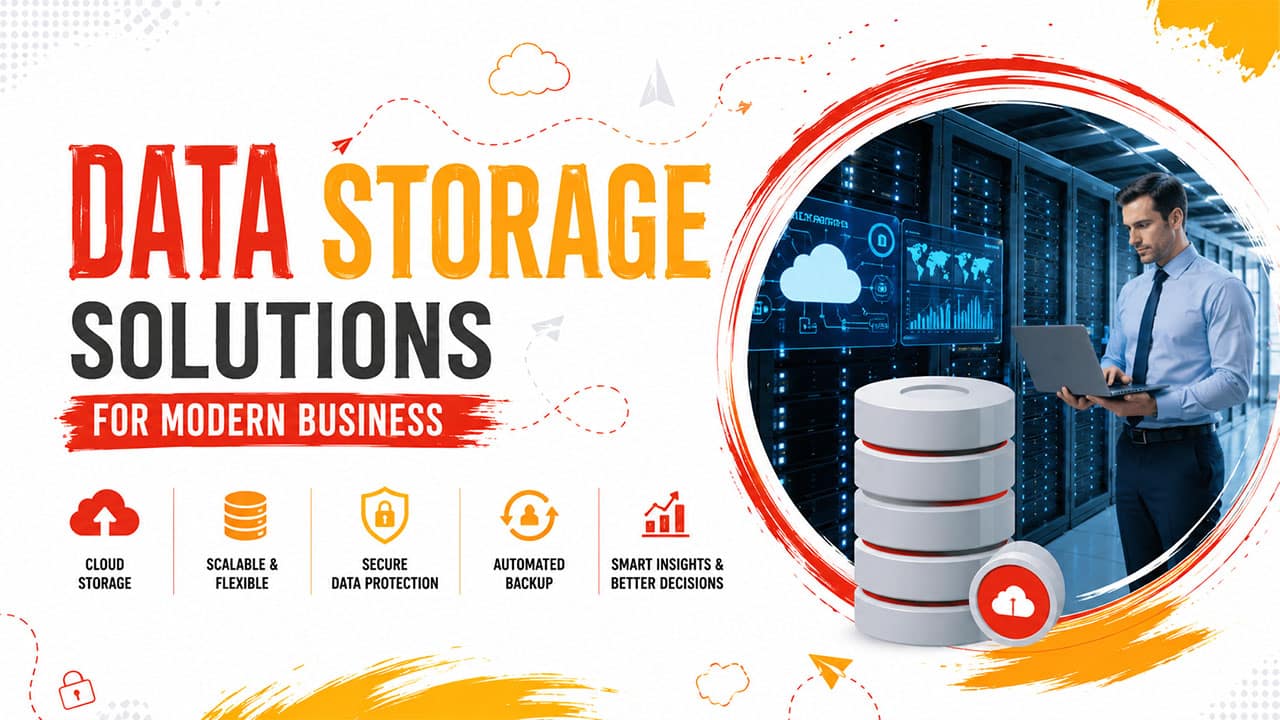
The article takes a deep dive into the best modern data storage solution for modern businesses in 2026, and explores the benefits, use cases, and factors to consider while choosing data storage.
In the current digital-first economy, data is among the most valuable assets for every business. From customer information and financial records to analytics and operational data, businesses generate and process a large amount of information. Similarly, with the increasing implementation of cloud computing, automation, hybrid work models, and AI-powered applications by businesses, the demand for the right storage solution increases significantly.
The modern data storage landscape in 2026 has evolved significantly. The organization prioritizes scalability, security, compliance, performance, and cost-efficiency. Businesses also want to ensure uninterrupted access to mission-critical information.
What is Meant by Data Storage Solutions for Modern Businesses?
Data storage solutions for modern businesses generally refer to the technologies, systems, and services that organizations use to securely store, manage, project, and access their digital data. These solutions are mainly designed to handle a large and growing volume of business information that is generated from day-to-day operations, customer interactions, cloud applications, and other key sources.
A modern data storage solution combines advanced technologies, such as cloud storage, hybrid storage solutions, network-attached storage, and storage area networks, among others. The combination of these systems enables businesses to scale up storage capacity effortlessly, and along with improving data accessibility, strengthening cybersecurity, and ensuring business growth, through automated backups and disaster recovery.
Benefits of Data Storage Solutions for Modern Businesses
The implementation of the right data solution by businesses ensures multiple key advantages that help the organization with performance, security, and operational efficiency.
Some of the key benefits of data storage solutions for modern businesses are as follows:
- Enhanced Data Security: Modern storage solutions combine various key security features, which include data encryption, multi-factor authentication, access controls, and continuous monitoring.
- Easy Scalability: With the growth of the business, their requirement for data storage also increases significantly. The modern storage solutions allow businesses to expand their storage capacity quickly, without requiring huge investments in expensive hardware or disrupting business operations.
- Improved Accessibility: Modern solutions, such as cloud-based and hybrid storage, enable businesses to access data securely from anywhere, with just a stable internet connection.
- Cost Efficiency: Modern storage solutions for businesses generally operate on a pay-as-you-go model, which allows businesses to invest only for the storage they utilize. It also reduces their upfront infrastructure cost and lowers maintenance expenses.
Why Modern Businesses Need Advanced Data Storage
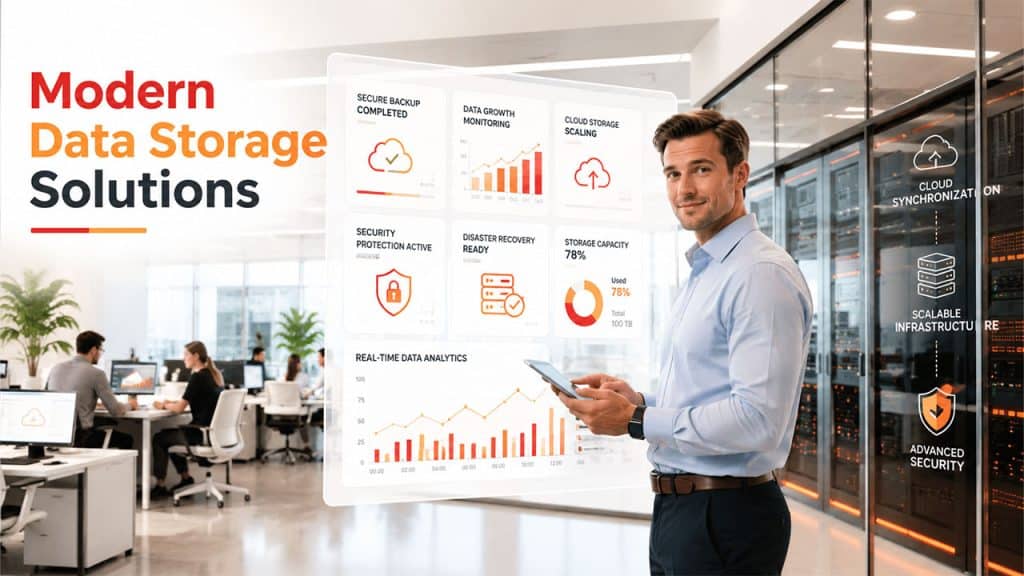
In the current digital landscape, businesses generate and process higher amounts of data than ever before. For this, advanced data storage solutions offer enhanced scalability, performance, security, and reliability, which are often required to manage this rapidly expanding data landscape.
Some of the key factors why modern businesses need advanced data storage are as follows:
- Managing Rapid Growth of Data: Businesses collect a large amount of data from different sources, such as websites, mobile applications, CRM systems, and social media, among others. An advanced storage solution can offer easy scalability to accommodate growing data volumes without compromising operational performance.
- Strengthen Data Security: Modern storage solutions are designed to include various built-in security features, such as encryption, multi-factor authentication (MFA), role-based access controls, continuous monitoring, and immutable backups, which help in protecting sensitive business information.
- Improving Business Continuity: Advanced storage solutions often include automated backups and disaster recovery capability, which allows businesses to easily restore data quickly, along with minimizing downtime and maintaining operational continuity.
- Supporting Data-Driven Decision Making: Businesses often rely on analytics and real-time insight to make informed decisions. Advanced storage systems can efficiently handle large datasets, which allows organizations to process and analyze information quickly.
When discussing modern data storage solutions, it is important to understand basic storage measurement units. Understanding How Many Gigs Are in a TB helps businesses estimate how much cloud storage, backup space, or server capacity they need.
Popular Data Storage Solutions for Modern Businesses
As businesses continue to generate vast amounts of digital data, selecting the right type of storage solution becomes more essential. The right storage solutions help businesses maintain efficiency, security, and continuity. Modern organizations generally use a combination of storage technologies to meet different operational needs, from managing backups and large datasets to storing critical business applications.
Some of the popular types of advanced data storage solutions for modern businesses are as follows:
Cloud Storage
Cloud Storage is among the most adopted data storage solutions by modern businesses. It offers enhanced flexibility, along with scalability and cost-effectiveness, to organizations. Email systems like Gmail rely on cloud-based storage infrastructure like Gmail storage, which is shared across Google.
Key Benefits:
- Scalable storage capacity
- Lower infrastructure costs
- Secure remote access
Best For:
- Startups
- Remote workforces
- SMBs
Hybrid Storage
The hybrid storage system combines an on-premises storage system with cloud storage, allowing businesses to keep sensitive information locally while storing less-critical data in the cloud.
Key Benefits:
- Improved flexibility
- Enhanced data security
- Better disaster recovery
Best For:
- Healthcare organizations
- Financial institutions
- Government agencies
Network Attached Storage (NAS)
Network Attached Storage, or NAS, is a dedicated file storage device that is connected to a business network. The solution enables multiple users and devices to access shared files from a centralized location.
Key Benefits:
- Centralized file storage
- Easy file sharing
- Cost-effective deployment
Best For:
- Small businesses
- Creative agencies
- Educational institutions
Storage Area Network (SAN)
Storage Area Network, or SAN, is a high-speed network that connects servers to centralized storage devices. The system offers block-level storage and delivers exceptional speed and performance.
Key Benefits:
- High-speed data access
- Low latency
- Enterprise-level reliability
Best For:
- Large enterprises
- Financial services
- Healthcare providers
Direct Attached Storage (DAS)
Direct Attached Storage, or DAS, is a storage device that is directly connected to a single computer or server, using interfaces such as USB, SATA, or Thunderbolt.
Key Benefits:
- Easy installation
- Fast local access
- Affordable solution
Best For:
- Small offices
- Freelancers
- Local backups
Other key popular types of storage systems include:
- Object Storage
- Software-Defined Storage (SDS)
- Solid-State Drive (SSD) Storage
- Edge Storage
- Backup and Archive Storage
Factors to Consider While Choosing Data Storage
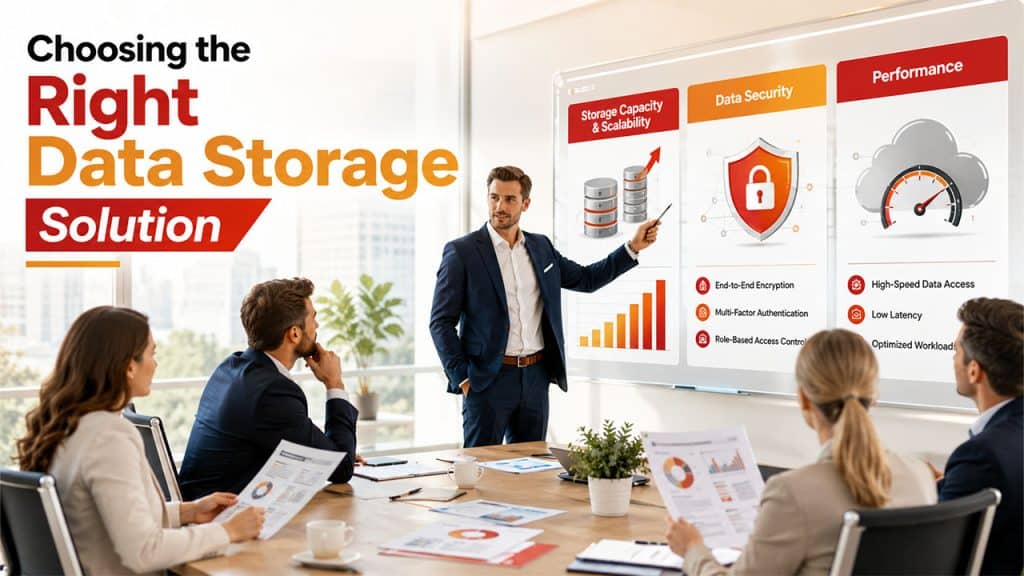
Selecting the right data storage solution is among the most critical decisions that can significantly impact the overall operations of a business. Before making an investment, an organization should evaluate several key factors to ensure the chosen storage system aligns with current needs.
- Storage Capacity and Scalability: Businesses should choose a storage solution that offers easy scalability. It allows businesses to increase storage capacity without replacing their existing infrastructure.
- Data Security: Modern storage should include advanced security features to safeguard data from cyberattacks, unauthorized access, and accidental loss. Businesses should look for features such as end-to-end data encryption, multi-factor authentication, and role-based access control, among others.
For businesses, solutions like Google Drive provide enterprise-grade security features that help protect files from unauthorized access and data loss. Users can also check out How Secure Is Google Drive to understand the multiple security layers of the platform, which is designed to protect sensitive business data.
- Performance Requirements: If the organization frequently accesses large files or uses AI and analytics, they need a storage solution that delivers high-speed data access with minimal latency.
Which Data Storage Solution Is Right for Your Business?
- Startups and Small Businesses
Startups and Small Businesses generally prioritize affordability, ease of use, and flexibility over complex infrastructure.
Best options:
- Cloud storage
- Network Attached Storage (NAS)
- Software-Defined Storage (SDS)
- Growing Mid-Sized Companies
The mid-sized businesses often experience rapid data growth and require better performance.
Best options:
- Hybrid storage
- Cloud storage
- Network Attached Storage
- Large Enterprises
Large enterprises regularly handle massive volumes of structured and unstructured data across multiple regions, departments, and applications.
Best options:
- Storage Area Network
- Hybrid storage architecture
- Software-Defined Storage
- Data-Heavy and AI-Driven Businesses
For companies working with advanced technologies, such as AI, machine learning, big data analytics, or IoT systems, storage systems that ensure speed and scalability.
Best options:
- Object storage
- Cloud Storage
- Edge storage
- Regulated Industries
Regulated industries require strict compliance requirements, prioritizing data protection, auditability, and secure access controls.
Best options:
- Hybrid storage
- Cloud storage
- Immutable backup storage
Conclusion
In the recent few years, data storage has become a crucial element of modern businesses. As organizations across the globe continue to generate massive volumes of data, choosing the right data storage technology directly impacts the efficiency, security, scalability, and long-term growth of the business. From cloud storage to SAN and NAS, each storage technology serves specific business needs and operational demands.
However, choosing the ideal storage technology depends on various factors, such as business size, industry requirements, budget, performance expectations, and regulatory compliance needs. Most modern businesses generally adopt a flexible and hybrid storage solution that offers balanced cost, enhanced accessibility, and security, while also ensuring future readiness.
Frequently Asked Questions
What is the core difference between cloud storage and hybrid storage?
A cloud storage system is fully online, while the hybrid storage system combines on-premises systems with cloud storage for better control and flexibility.
What is a SAN storage system used for?
The SAN, or storage area network system, is used for high-speed, enterprise-level storage, with low latency. It is commonly used in large organizations.
Is a cloud storage system secure for businesses?
Yes, a cloud storage system for business is highly secure. It includes a high level of encryption, multi-factor authentication, access control, and proper configuration.
Is a cloud storage system cost-effective for small businesses?
Yes, the cloud storage system is usually the most cost-effective solution for small businesses, as it offers low setup and maintenance costs.