

 Continue with Google

 Share on media
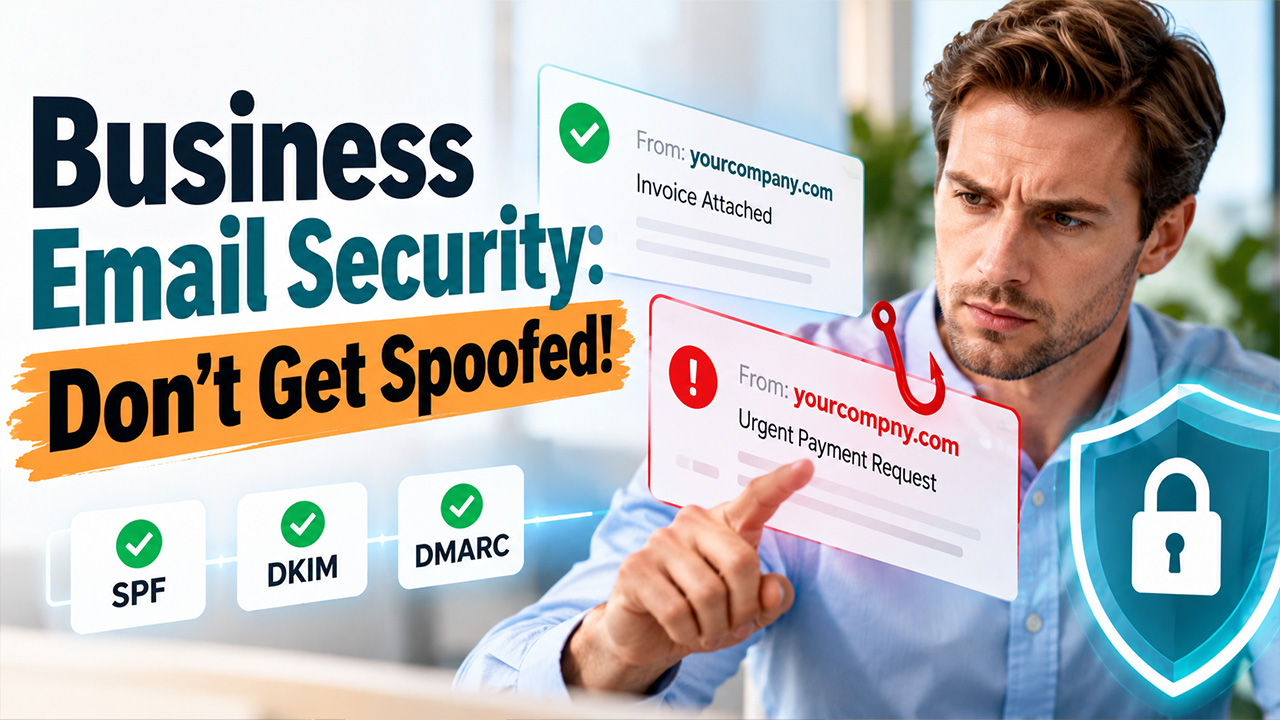
In the current digital landscape, business email is commonly used by companies to send invoices, win clients, and confirm payments. It is also among the most abused channels in cybercrime. Attackers do not need to break into a company system, but they can simply pretend to be the company, using a forged sender address or a domain that looks almost identical to the real one.
When this happens, the major damage lands on clients, partners, and employees who trusted the message. Protecting a business email domain is considered essential as both a security task and a reputation task. The most crucial controls are often inexpensive once a business’s owns the project.
The Three Ways Attackers Abuse Business Email
The majority of electronic mail attacks against a business fall into three categories. The first category is spoofing, in which an actor creates a fake sender address so that a message seems to originate from the actual domain of the business. The second category is the look-alike domain. To perform this an actor registers a domain name that is nearly identical to the name of the business, like a name with a substituted letter or an extra word, and sends mail from that specific address.
The third category is account takeover – in this scenario, an actor compromises an actual mailbox using a stolen password. The actor then uses the mailbox to send messages that are technically authentic. Each category requires a specific defense. Because of this, one single security control is not enough to stop every attack.
Email Authentication – Identifying Authentic Messages for Recipients
Three technical standards function together to assist mail systems that receive messages in determining if a message originated from a specific domain. SPF provides a list of servers that have permission to send mail for the domain. DKIM attaches a digital signature that proves no one modified the message during its journey. DMARC connects those two standards and instructs the recipient systems on how to handle messages that fail the checks, like isolating or blocking them.
Many businesses use settings that are incomplete, or they keep DMARC in a mode that only observes data for an unlimited time. Observation is a practical initial action, but the security exists only when the business applies to the policy. It is important to perform this process with caution. On this point, the business must identify authorized senders like marketing services and billing software first, or the system might block legitimate mail.
Authentication Also Helps Your Own Deliverability
The method of email authentication is generally discussed as a security measure, but it also affects whether a legitimate message reaches the inbox. Businesses can use DKIM email authentication alongside SPF and DMARC to help mailbox providers verify message authenticity. Messages that fail authentication checks may land in spam or be rejected outright.The business that sends invoices, proposals, or outreach at any volume usually benefit directly from getting these records right.
This makes it easier to justify the work internally. The same configuration that makes it harder for attackers to impersonate the company also helps the company’s real messages arrive reliably.
Watch for Look-Alike Domains
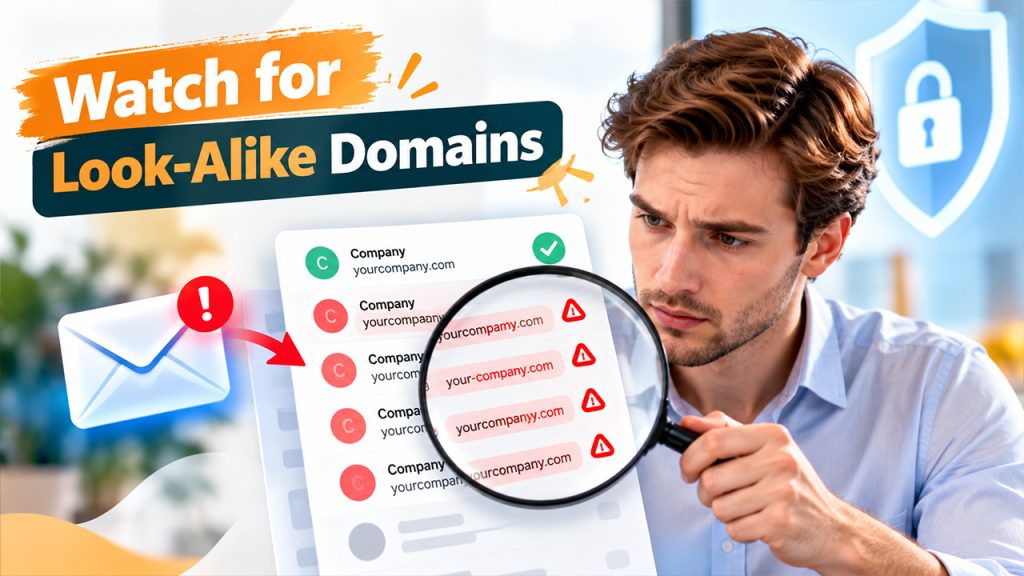
It is impossible for authentication to prevent an attacker from sending mail from a domain that is like yours. The best defenses in this case are practical rather than technical. Businesses should register the most obvious variations of their own domain, keep a close eye on any new registrations that closely resemble their name, and teach their staff and clients to check the real sending address rather than just the display name.
Certain mail services are able to identify messages coming from newly registered or look-alike domains, and warning notices on external email help employees to hesitate before taking action on a request that appears to be urgent or unusual.
Stop Account Takeover at the Source
Authentication is successful when an attacker has taken control of a real mailbox since the mail actually does come from the company; the defense in this case is that of protecting the account. The most important control is to use multi-factor authentication for every mailbox, together with the blocking of outdated sign-in methods which circumvent modern protections and the issuance of alerts for unusual sign-ins.
It is also important to monitor suspicious inbox rules since attackers often set up hidden forwarding or deletion rules so that the actual user does not realize that replies to fraudulent messages have been sent. Such rules and sign-in activity can be detected quickly through regular reviews.
Build Verification Habits Into Payments and Changes
Although technology helps to reduce risk, attackers still make use of convincing a person to take action. In the case of the most expensive incidents, the requests are for changes to bank details or for an urgent payment to be sent. A simple rule- requiring that any alteration to payment instructions be confirmed by means of a separate channel that is known, for example by a phone call to a number already on file- stops most of these attacks.
Reminders that are brief and given regularly are more effective than a single annual training session; those who deal with money and sensitive requests are the ones most often targeted and gain the most from a simple and easy verification procedure.
How Mindcore Technologies Helps Businesses Protect Their Email
Mindcore Technologies has spent more than 30 years helping businesses secure the systems their communication depends on. Under the leadership of Matt Rosenthal, CEO of Mindcore Technologies, the company delivers IT solutions in West Palm Beach that include multi-factor authentication, 24/7 monitoring, endpoint protection, and Microsoft 365 management, along with email authentication reviews that account for every system sending mail on a company’s behalf.
Businesses working with Mindcore get email protection configured in a careful sequence, with monitoring that catches suspicious activity early and clear processes for verifying sensitive requests.
Conclusion
Protecting a business email domain generally means defending against multiple factors like, forged senders, look-alike domains, and compromised accounts, with each having its own controls. Enforcing security measures, like SPF, DKIM, and DMARC, along with watching for limitations domains, securing mailboxes with multi-factor authentication (MFA), and building verification habits around payment together, usually closes the most common routes. The efforts also pay back in better deliverability and stringer trust with the clients, partners, and employees, who generally rely on company’s messages.