
 Continue with Google

 Share on media
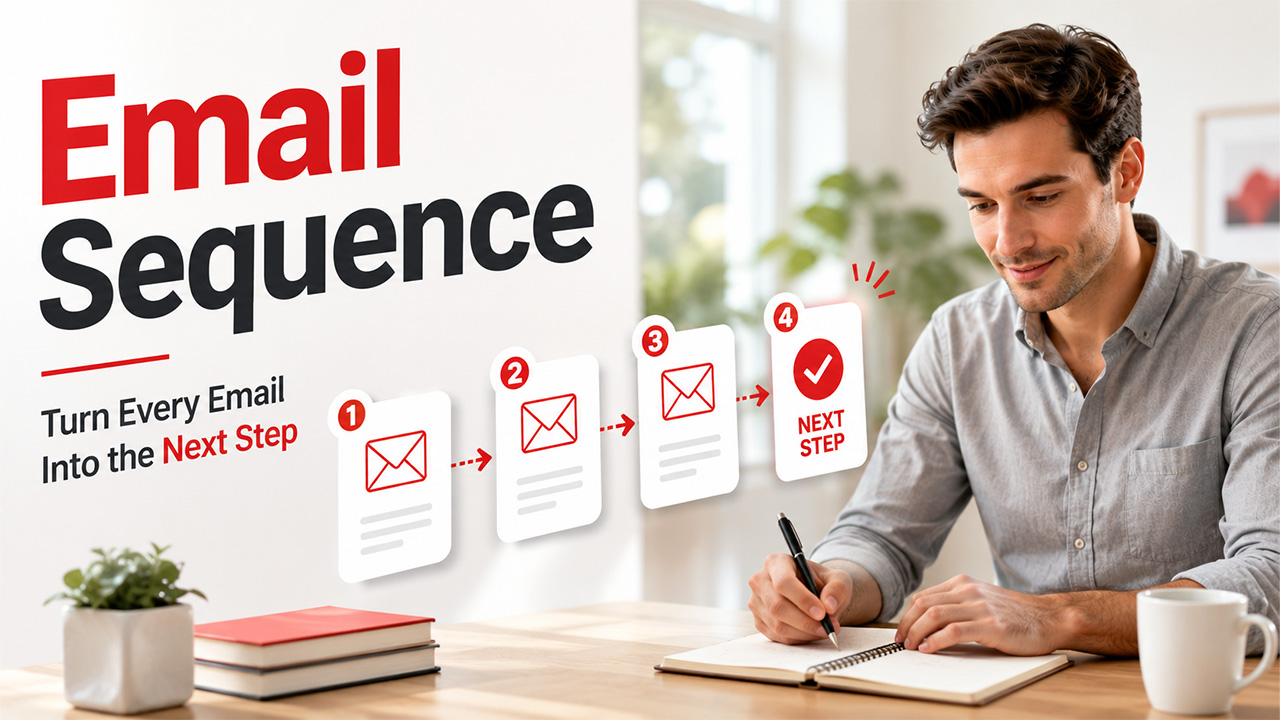
Most businesses treat an email sequence the same way they treat a to-do list. They write five or six emails, load them into a tool, schedule them, and move on to the next task. Then they wonder why nobody replies.
A good email sequence isn’t something that you set and forget later. It is more like a conversation that you have with someone who hasn’t decided yet whether they trust you. Every email either earns the right to send the next one, or it doesn’t. If you’ve ever felt like your emails are going into a void, this guide will walk you through what an email sequence actually is, how it works, and how to build one that people actually want to open.
What Is an Email Sequence?
An email sequence refers to a set of emails sent automatically, one after another, to a person based on an action they took or a timeline you set. You can think of it as a pre-written conversation that unfolds over days or weeks instead of all at once. For instance, someone signs up for your newsletter, and instead of one email that gets buried in an inbox, they get a short series that welcomes them, teaches them something, and eventually invites them to buy.
It’s one of the simplest ways to build a relationship with someone without personally writing a message to each person.
How Does an Email Sequence Work?
An email sequence runs on triggers and timing, not guesswork. Here’s the basic mechanics behind it that can help you understand email sequences better:
- A Trigger Starts the Sequence: The sequence starts when someone signs up, downloads a guide, or abandons a cart. That single action signals the system to begin sending emails.
- Emails Go Out on a Set Schedule: You decide the gap between emails, whether that’s one day or one week, so the pacing feels natural and steady instead of rushed.
- Each Email Builds on the Last One: The second email assumes the person read the first. So, the tone and content shift naturally as the relationship develops.
- Behavior Can Change the Path: Many tools let you branch the sequence. If someone clicks a link, they might get a different next email than someone who didn’t.
- The Sequence Ends with a Clear Outcome: A purchase, a reply, a booked call, or simply a well-informed subscriber who now knows your brand.
Email Sequence vs Drip Campaign vs Email Blast
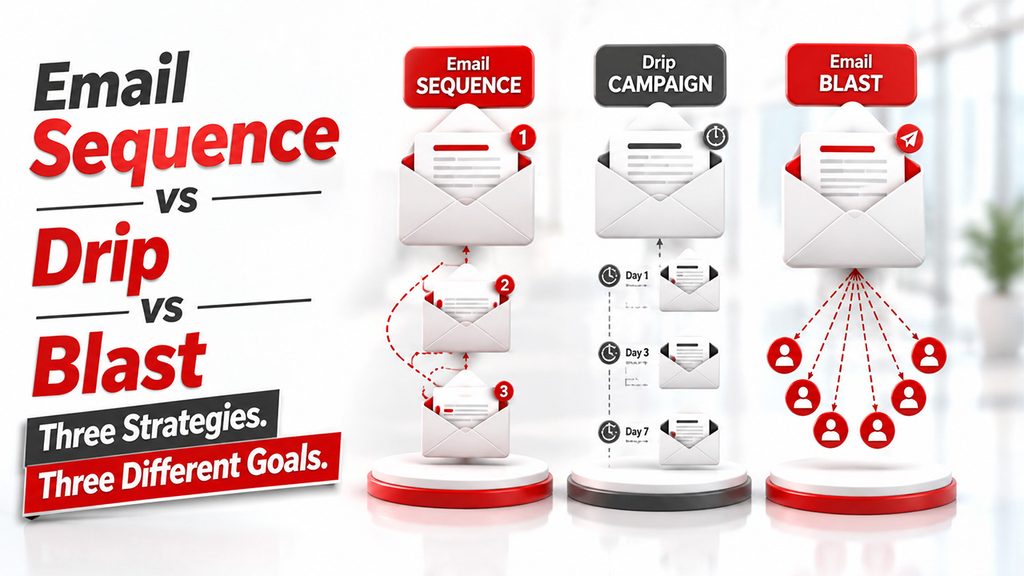
People use these terms interchangeably, like they mean the same thing. News flash, they don’t. And mixing them up usually leads to sending the wrong kind of email at the wrong time.
| Feature | Email Sequence | Drip Campaign | Email Blast |
| Trigger | Specific user action (signup, download) | Time-based or behavior-based, often broader | No trigger, sent manually to a list |
| Personalization | High, tailored to where the person is in the journey | Moderate, often segmented but less individual | Low, same message to everyone |
| Goal | Build a relationship over time | Nurture leads with steady, spaced content | Announce something quickly |
| Example | Welcome series after signup | Monthly educational content for cold leads | Flash sale announcement |
A drip campaign is a broader category. An email sequence, on the other hand, is a more targeted, behavior-driven version of it. Whereas an email blast doesn’t care about timing or triggers at all. It’s just one generic message sent to everyone at once.
Benefits of Email Sequence Automation
Automating your sequences isn’t just about saving time, though that’s part of it. Here’s what it actually does for your business.
Keep Email Messaging Consistent: Every new subscriber receives the same thoughtful, well-written introduction to your brand, no matter when they sign up or what day of the week it is. You don’t have to rely on someone’s memory or manual effort to follow up. This means everyone is being paid attention to, and nobody slips through the cracks.
Nurture Leads Automatically: Once the sequence is built, it runs on its own, moving people from curious to convinced over several emails instead of trying to close them with one pushy message. This gives people time to warm up naturally.
Improve Email Open and Click Rates: Timed and relevant emails keep people engaged and curious instead of tuning out after the first message. This also improves your sender’s reputation with email providers.
Unlike a single email blast, a sequence lets you build trust gradually instead of asking for everything in one message.
7 Types of Email Sequences With Templates
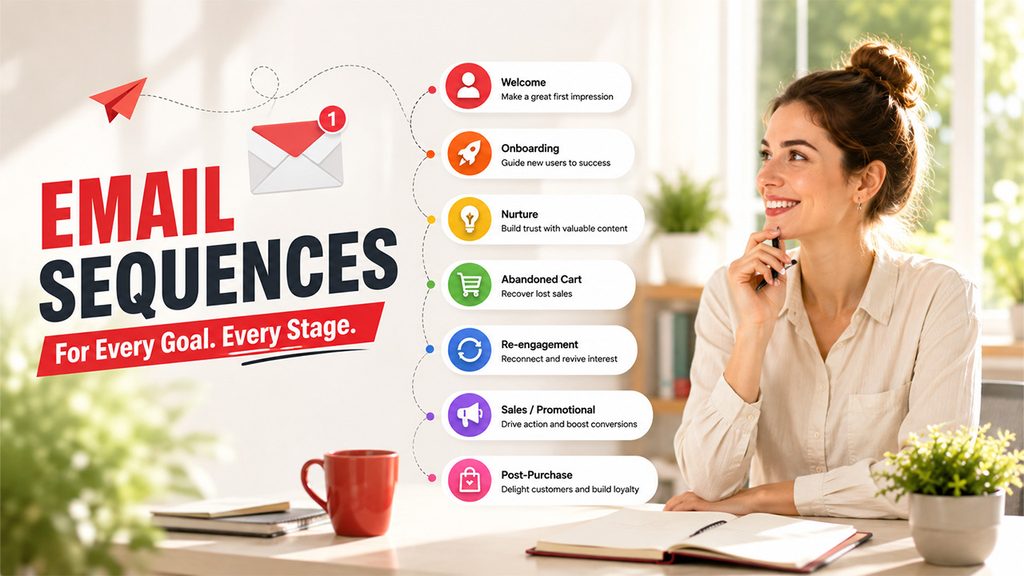
Different goals call for different sequences. Here are seven you’ll come across most often, with a full explanation and template for each.
1. Welcome Sequence
This is the first impression a new subscriber gets of your brand, so it needs to feel warm and welcoming without overwhelming them. It usually spans two to four emails that introduce who you are, what you offer, and why they should trust you. The goal is to build familiarity and trust before you ask for anything.
Template:
Subject: Welcome to [Brand], [Name]!
Hi [Name],
Thanks for joining [Brand]! We’re glad to have you here. Over the next few days, we’ll share a few resources to help you get started, along with some tips our community finds useful. In the meantime, here’s a quick guide to help you begin: [Link]
Talk soon,
[Your Name]
2. Onboarding Sequence
It is sent after someone signs up for a product, service, or trial. This sequence typically includes the setup process step by step to help you through it. Without it, new users might get confused or give up before they see any real value in your brand. A good onboarding sequence informs people exactly what to do next and removes friction, one email at a time.
If your onboarding steps involve sending manual follow-ups too, knowing how to schedule email in Outlook helps you stay consistent alongside the automated emails.
Template:
Subject: You’re in! Let’s get you set up
Hi [Name],
Welcome aboard! Here’s how to get started in three simple steps:
Set up your profile: [Link]
Connect your first project: [Link]
Explore your dashboard: [Link] If you get stuck anywhere, just reply to this email and we’ll help.
[Your Name]
3. Nurture Sequence
This sequence focuses entirely on educating the reader rather than pushing for a sale. It is particularly useful for those leads who haven’t decided to buy yet but might be persuaded over time with helpful, relevant content. Each email should deliver one clear piece of value, whether that’s a tip, an insight, or a resource, without asking for anything in return.
Template:
Subject: A quick tip to help with [problem]
Hi [Name],
Here’s something that’s helped a lot of people dealing with [specific problem]: [tip or insight]. Try it out and let us know how it goes. No strings attached, just something we thought you’d find useful.
[Your Name]
4. Abandoned Cart Sequence
This sequence is especially for shoppers who add items to their cart but leave before completing the purchase. First, it usually includes a gentle reminder, followed by an incentive like a discount or coupon code if they still haven’t returned. Here, timing matters a lot since most cart abandonments are recovered within the first 24 hours.
Template:
Subject: You left something behind
Hi [Name],
We noticed you left [Product Name] in your cart. It’s still there, waiting for you!
Complete your order in the next 24 hours and get 10% off with code SAVE10.
[Complete My Order]
[Your Name]
5. Re-engagement Sequence
It targets subscribers who haven’t opened or clicked your emails in a while. This email sequence is sent out to try to win their attention back before you remove them from your list. It often works best when it acknowledges the silence directly and offers something fresh, like an update or a special incentive, to spark interest again.
Template:
Subject: We miss you, [Name]
Hi [Name],
It’s been a while since we last connected, and we wanted to check in. Here’s what’s new since you last visited: [update or feature].
If you’d like to stay updated, just click below. If not, no hard feelings.
[Keep Me Updated]
[Your Name]
6. Sales or Promotional Sequence
This sequence is used to build momentum around a specific sale, offer, or product launch, usually over a few days up to a deadline. It creates a sense of urgency without sounding desperate or pushy. It reminds subscribers what’s on offer and why they should act on it before time runs out.
Template:
Subject: Our sale ends in 48 hours
Hi [Name],
Just a reminder that our [Sale Name] ends in 48 hours. Here’s why it’s worth grabbing now: [key benefit or discount detail].
[Shop the Sale]
Don’t miss out,
[Your Name]
7. Post-Purchase Sequence
It is sent right after someone makes the purchase. This sequence focuses on building loyalty and reducing buyer’s remorse. It typically includes a thank-you message, tips on how to use the product, and eventually a nudge toward a repeat purchase or referral. It’s one of the most overlooked sequences, even though it directly affects customer retention.
Template:
Subject: Thanks for your order, [Name]!
Hi [Name],
Thank you for choosing [Brand]! Your order for [Product Name] is on its way.
Here’s a quick guide to help you get the most out of it: [Link]
As a thank-you, here’s 15% off your next order: CODE15
[Your Name]
How to Create an Email Sequence: Step-by-Step Process
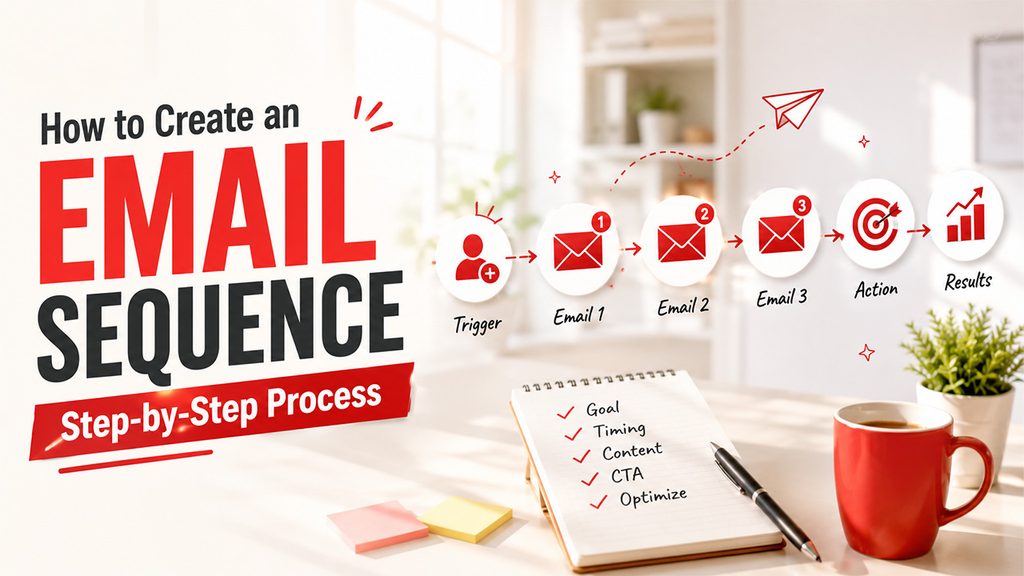
Building a sequence isn’t complicated once you break it into pieces. Here’s how to actually set one up.
- Define Your Email Sequence Goal: Decide what you want the sequence to achieve, whether it’s a sale, a signup, or simply keeping someone informed. This shapes everything else you write.
- Choose the Right Trigger: Pick the exact action that will start the sequence, like a form submission or a cart abandonment.
- Determine the Number of Emails: Most sequences run between three and seven emails, though this depends entirely on your goal and audience.
- Give Each Email a Clear Purpose: Avoid cramming multiple messages into a single email. Each one should address something specific and nudge the reader one step closer to the outcome.
- Set the Right Timing Between Emails: Keep enough gap between emails so that they don’t feel like spam, but not so far apart that people forget who you are.
- Add One Clear Call to Action: Too many choices confuse people and lower your click-through rate. So, add a single CTA per email not to overwhelm customers.
- Test Your Email Sequence Before Launch: Send it to yourself or a small group first to catch broken links or awkward phrasing. This will help you make necessary changes before it reaches your customers.
- Monitor Sequence Performance and Optimize: Watch open rates, click rates, and replies, then tweak subject lines or timing based on what you see.
If you’re managing this across different platforms, knowing how to schedule an email in Gmail can save you time when testing individual sends before automating the full sequence.
Conclusion
An email sequence works best when you stop treating it like a batch of scheduled messages and start considering it like an actual conversation. Each email should draw attention, build on what came before it, and guide the reader gently toward a decision. The underlying principle remains the same whether you are building a welcome series or a re-engagement campaign, which is knowing your goal, respecting your reader’s time, and keeping refining based on what the data tells you. Once you get the rhythm right, your email sequence stops feeling like automation and starts feeling like genuine communication that just happens to run on autopilot.