


 Continue with Google

 Share on media
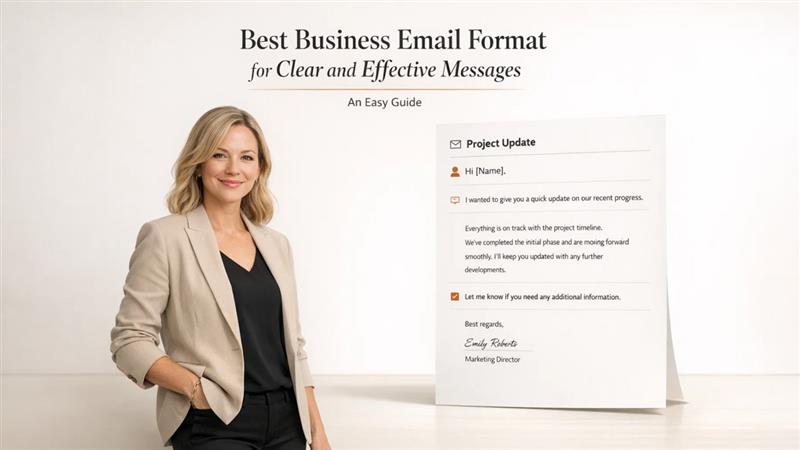
Want to upgrade your business email skills? This blog offers you a guided journey across the benefits, formats, and key considerations of a proper email format for business purposes.
A business email is a professional mode of communication, which is aimed at increasing brand credibility, trust, and security. A business email is used by all official correspondence, which includes communication between a business to another business, within an organization, professional messaging, and customer service, among others. The business email format is a well-structured, concise, and professional layout used for communicating within and across an organization. A proper professional business email format example includes salutations like “Dear (Name)” or “Hello (Name)”, with a polite opening statement like “I hope this email finds you well”, and a concise body. Closing with “Best Regards”, “Sincerely”, or “Thank You”, a detailed signature.
What is Meant by Business Email Format
A business email format is a well-structured, professional, and concise layout of an email layout, which is used for corporate communications. A business email helps in ensuring clarity and credibility of the discussion and maintains a courteous tone. A detailed and professional business email format follows a direct and concise subject line, followed by a professional greeting and a polite introduction of context setting. A business email format includes a short and focused paragraph, along with a professional sign-off or closing statement. The proper email format generally ends with a detailed signature, which includes the full name of the sender, along with the job title, company, and contact information.
The format of a professional business email may also depend on the nature and structure of the organization or industry. For instance, the CBRE Capital Markets email format follows a particular hierarchy, and it includes details in the subject line. CBRE suggests including details like property name, address, and other context of communication in the subject line.
Elements of Business Email Format
The professional business element includes various key elements, like a clear subject line, formal greetings, and a concise body. Following proper email etiquette, the professional business email format also includes a clear call to action and a professional signature. It is also worth noting that a business email format uses short sentences, along with bullet points for readability.
The key elements of business email format are as follows:
- Subject Line– A professional business email includes a short and specific description of the email’s content.
- Salutation– A proper email format for business purposes includes a professional opening, like Dear or Hello, followed by the name of the recipient.
- Opening Sentence– The opening sentence of a proper business email states the reason for writing the email immediately.
- Body Paragraph– The body paragraph of the business email should be concise and should be focused on one topic only. The body paragraph should also be easy to read and have bullet points to enhance readability.
- Closing Statement– The business email format should consist of a polite and professional closing statement, like “Best regards”, “Sincerely”, and “Thank You“.
- Signature Block– In a professional business email, it is essential to include your full name, along with your title, company name, and contact information.
- Attachment- If you have attached any document or file to the email, it is essential to mention the attached file in the body.
Benefits of Business Email Format
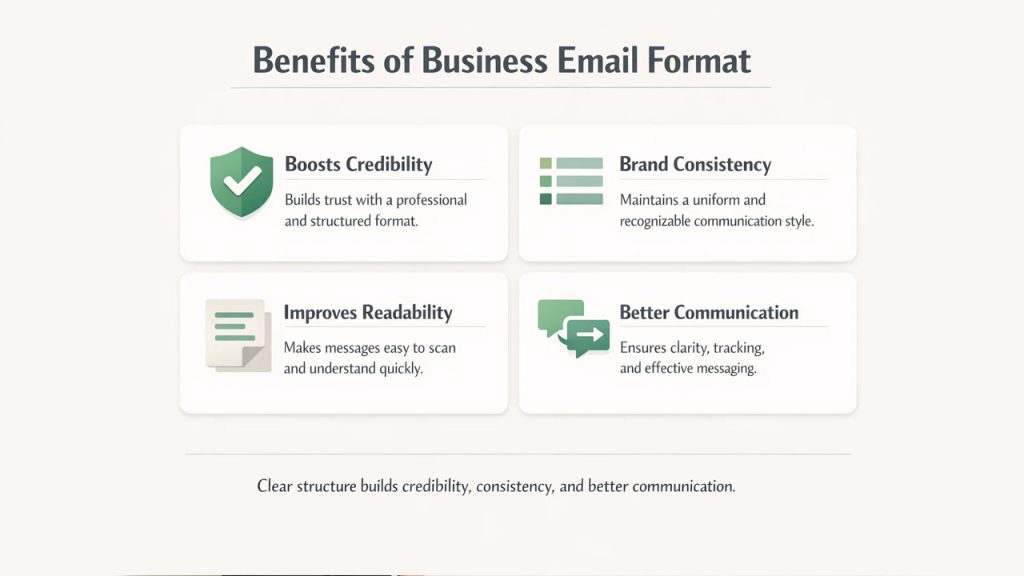
A proper business email offers various key benefits for communication within or outside an organization. A proper business email helps in enhancing the credibility of the sender or the organization, along with ensuring a prompt communication channel. A proper business email format also offers better readability and engagement, as these emails are clear, to the point, and properly formatted.
Some of the key benefits of a proper business email format are as follows:
- Boosts Credibility– Using a properly formatted and well-structured format helps in improving the credibility of your business and enhancing trust towards the brand.
- Enhances Brand Consistency- A consistent email layout, along with professionally designed email signature templates, helps reinforce your brand identity and ensures a uniform look across all communications.
- Improves Readability- A proper email format features a clear, concise, and properly formatted body, making it easier to read and improve the engagement of the recipient.
- Improves Communication Effectiveness- A properly formatted business email consists of a professional signature, which makes it easier to track, search for information, and archive, making it easy to create an organized paper trail.
Different Types of Email Formats
There are various types of business email formats based on the specified purpose of the emails. Although the common structure of the email, i.e., clear subject line, professional salutation, and concise body, remains the same; the changes vary in the tone and information depending on the types of email specified.
There are six main types of business emails, which include:
- Welcome Email- The welcome email, as suggested by the name, introduces new subscribers or customers to the brand’s tone. This type of mail also provides initial information related to the brand.
- Sales/Cold Outreach- The sales or cold outreach emails focus on capturing the attention of the recipient. This type of email features pain points and offers solutions to the reader. The sales or cold outreach emails generally include a call to action.
- Newsletter- The newsletter email offers regular updates related to the brand or any other organization. The content of the email contains information, along with creative content regarding the company.
- Transactions/Confirmation- The transactional or confirmational emails are generally short and sent to confirm the order, appointment, or shipping details.
- Follow-up Email- The follow-up emails are sent to follow up on any previous, unanswered emails. The follow-up emails are often used to re-engage prospects and to confirm their details.
- Inquiry Email- The request or inquiry email is used to request resources, assistance, or information, which generally requires a clear and concise professional tone.
Key Considerations for Business Email Format
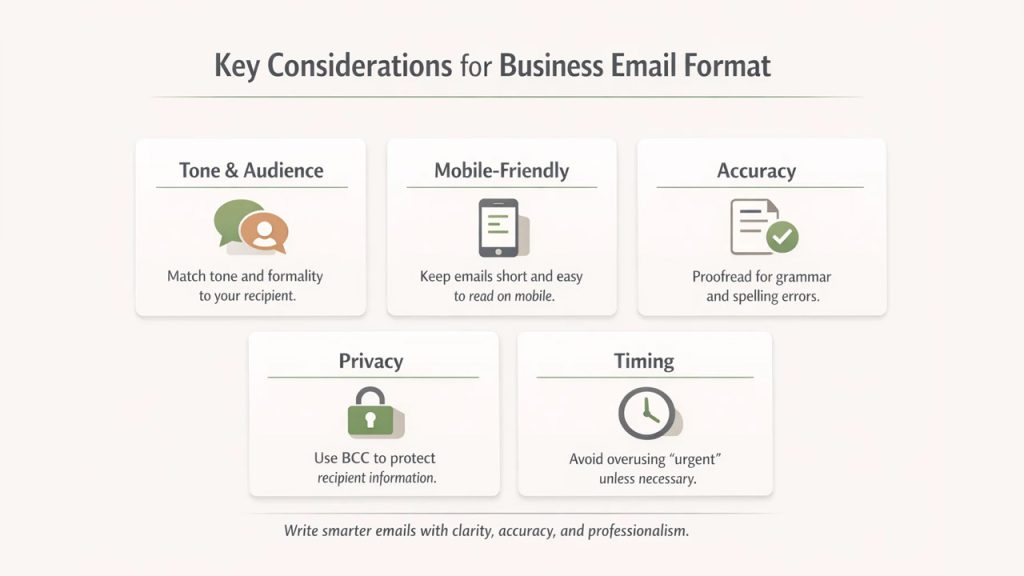
An effective business email requires a clear and concise format, which includes a specific subject line, professional greetings, and a brief body paragraph, among other key elements. For professional business emails, it is also essential to note a few key considerations, which are as follows:
- Tone & Audience- It is to note that the tone and formality of the email should match the recipient, ensuring the email is professional and polite.
- Mobile-Friendly- To keep the email mobile-friendly, it is essential to keep the email short and avoid any large attachments.
- Accuracy- It is also essential to proofread spelling and other key grammatical errors.
- Privacy- Using the Blind Carbon Copy (BCC) field when emailing multiple people is important, especially for people who do not know each other, to protect their privacy.
- Timing- The sender of a professional business email format should also avoid using terms like “Urgent” unless it is absolutely necessary.
Conclusions
A proper business email format is a well-structured and concise layout used for corporate communications, both within and outside the organization. It consists of a clear subject line, a formal salutation, and a direct body paragraph. A business email also includes a professional closing line with a detailed signature. The tone should remain professional and courteous, along with the proper use of CCs and BCCs. Learning how to cc in Gmail can help ensure the right recipients are included. It is also essential to proofread for errors and check attachments before sending the email.
A proper business email format offers various key benefits, as it helps in boosting the credibility of the brand, along with improving the trust towards the brand. A proper business email format also helps in enhancing the consistency of the emails, as it features a consistent email layout, with a concise body and subject line. The business email format also helps in enhancing the readability of the email, as it features a clear and properly formatted body, making it easy to read. The business email address can also be categorized into six major types, including welcome email, sale or cold outreach emails, email newsletter, transactional emails, follow-up emails, and inquiry emails.
Frequently Asked Questions
What are some essential parts of a business email?
A professional business email consists of various essential elements, which include a concise subject line, a clear CTA, and a short paragraph with proper formatting. In a professional business email, a signature, with all major details like full name, title, company, and contact information, is also essential.
Is it essential to enter a signature in a business email?
Yes, in a business email, it’s essential to enter a signature at the end of the email, as it functions as a digital business card. The signature of the email includes the full name of the sender, along with job title, company, and contact information.
What should be the ideal length of the subject in a business email?
In a business email, the length of the subject should not exceed 4 to 7 words or about 30 to 50 characters. It is essential to keep the subject line short and precise to the topic.
What should be the average length of the body paragraph in a business email?
In a business email, you can add 2 to 4 short paragraphs, with each paragraph typically ranging from 30 to 50 words. If you need to add more paragraphs in a business email, consider using headings, links, or attachments to increase the readability of the email.
Can I add a CTA to a business email?
Yes, you should add CTAs (or call to action) in a business email, as it guides the reader on what to do next. The CTA should be clear, single, and action oriented.