
 Continue with Google

 Share on media

If you’ve ever sent a cold outreach campaign from a brand-new email address only to watch it land straight in spam, you’ve run into exactly the problem email warmup exists to solve. Email providers don’t automatically trust new senders, and until they do, even well-written emails can get buried before anyone sees them.
At its core, email warmup is the process of gradually building trust with inbox providers by slowly increasing how many emails you send from a new address, while making sure real engagement, opens, replies, and genuine conversation happen along the way. It’s less about tricking the system and more about proving you’re a real sender worth trusting.
In this blog, we’ll get into what email warmup actually involves, why skipping it can hurt you long-term, how the process works in practice, and what else you need alongside it to actually see results in your inbox placement.
What Is Email Warmup?
Email warmup, sometimes written as email warm up, is exactly what it sounds like: the process of slowly increasing your sending volume from a new email address or domain so inbox providers learn to trust it over time.
Consider this situation from the provider’s point of view. The very fact that a brand-new email address starts sending hundreds of emails makes it look very much like spam. Inbox providers such as Gmail and Outlook do not yet know about the sender’s good intentions and automatically filter any strange behavior directly into the spam folder.
Solving this problem is easy on paper but not always simple in practice: senders just need to start sending emails slowly in the beginning, like a person normally would, and gradually increase their sending volume.
Why Email Warmup Is Important
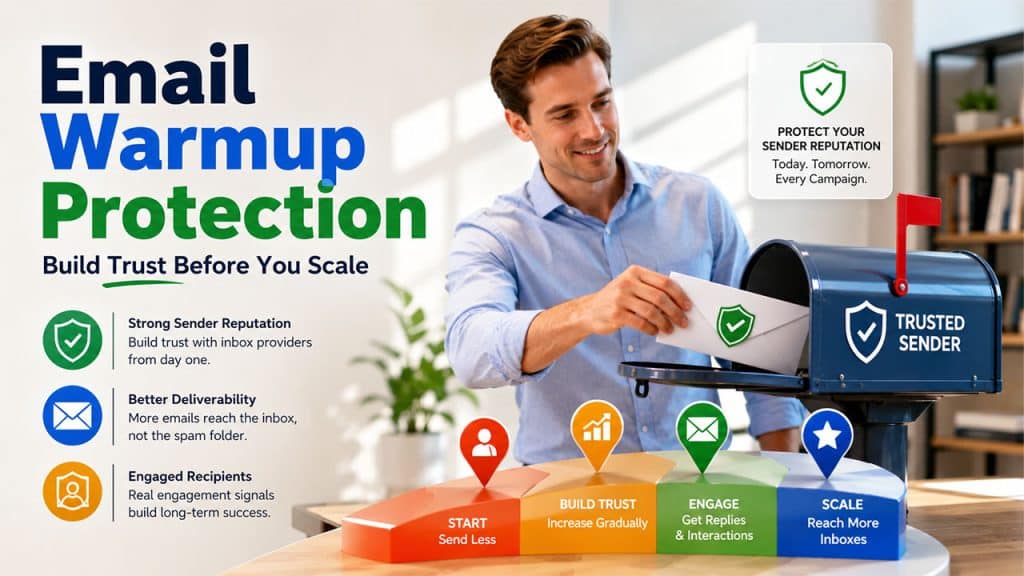
The difficult truth about not warming up is not just the chance of having some emails go to your recipient’s spam folder, but the fact that your sender reputation may get compromised to a point that is difficult to fix.
When using a new IP or a new domain, it is viewed as unknown by all email service providers, and if your sending practices appear suspicious at the beginning, you are likely to face problems right away.
Not doing email warmup means taking the following risks:
- Receiving your emails directly in the spam folder despite the high-quality content of the messages.
- Decreasing your deliverability overall and not just for one specific campaign.
- Having your domain blacklisted due to a lack of warmup practices.
- That last point is the one that strings. A damaged domain reputation doesn’t just cost you one bad campaign; it follows you.
That’s why warming up an email account properly from day one matters so much more than it might seem at first glance; it’s protecting your ability to reach inboxes at all, long after this campaign is over.
How Email Warmup Works
While the process itself isn’t necessarily complex, email warmup does require dedication and consistency. Rather than adhering to a certain volume of emails per day, the goal here is more to give off the right signals to providers monitoring your behavior.
To warm up properly, you generally need to:
- Get real replies: Genuine back-and-forth conversation tells providers your emails aren’t one-way spam blasts.
- Make emails look like real conversations: Personalized, natural- sounding messages read very differently to a spam filter than templated bulk sends.
- Avoid big blasts early on: Sending hundreds of emails from a fresh address on day one is one of the fastest ways to get flagged.
- Mark emails as important when possible: Small positive engagement signals add up over time.
Overall, simply behave as if you’re actually a human who’s sending actual emails, which is exactly what providers are trying to detect in your activity.
A warmup period typically lasts anywhere between a few emails a day at the beginning and several weeks overall. Don’t rush through the process, or it won’t be worth anything.
Manual vs Automated Warmup
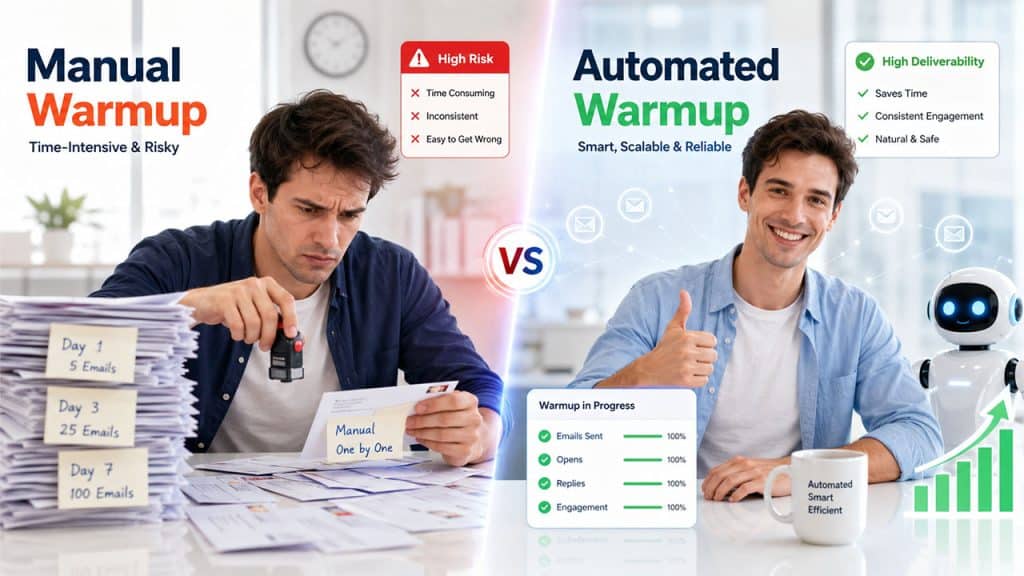
You’ve got two real paths here, and which one fits depends on how much time you’re willing to put in versus how much you’re willing to pay.
Manual warmup means doing it yourself, sending small batches to trusted contacts, gradually increasing volume, and making sure real replies happen along the way. It costs nothing but time, and it works; it’s just slow and easy to mess up if you’re not consistent.
Automated warmup uses dedicated software to simulate that same engagement across a network of inboxes, opens, replies, and natural-looking conversations, without you manually managing it. Tools vary a lot in quality here, though; some genuinely simulate human behavior well, others rely on more robotic patterns that providers are increasingly good at spotting. If you’re comparing platforms that build deliverability tools into a broader email marketing suite, it’s worth reading a detailed Moosend review before deciding, since not every all-in-one platform treats warmup with the same care.
For anyone managing multiple inboxes for outreach at scale, automation usually wins on practicality. For a single account sending moderate volume, manual warmup done properly works just fine.
Beyond Warmup: Other Ways to Improve Deliverability
Here’s the thing worth knowing upfront: email warmup is a critical piece of the deliverability puzzle, but it’s still just one piece. Even a perfectly warmed-up account can land in spam if the rest of your setup isn’t solid.
A few things worth handling alongside warmup:
- Authenticate your domain: Implement SPF, DKIM, and DMARC records so that service providers will be able to verify your emails.
- Track engagement statistics: Watch out for open rates, bounces, and spam complaints; they may indicate problems with deliverability.
- Maintain your email list’s cleanliness: Regularly delete inactive and unverified contacts because bounces negatively impact your reputation.
- Steer clear of spam flags: Be careful about some specific words and too many links in the body of your email.
- Be consistent: An all-of-a-sudden increase in sending volume may raise suspicion even when you have a warmed account.
If you want a fuller breakdown of how to actually improve email deliverability beyond just the warmup process, it’s worth digging into the specific tactics that keep inboxes accessible long-term rather than treating warmup as a one-time fix.
Conclusion
At the end of the day, email warmup isn’t a box to check once and forget about; it’s an ongoing part of protecting your ability to actually reach inboxes. Skip it, and even great content can end up buried in spam before anyone reads a word.
Luckily for you, this doesn’t mean you have to do anything too difficult; all you need to do is be patient and consistent with your efforts. Start small, establish true engagement, gradually increase your activity level, and combine it with effective domain authentication and list hygiene, and you will cover the basic principles that help maintain deliverability after the initial warm-up is over.
Warmup on its own won’t carry an entire campaign, though. It works best as one piece of a broader approach, alongside clean data, thoughtful timing, and the kind of email marketing strategies that keep your audience genuinely engaged rather than just technically reachable.
Frequently Asked Questions
What does email warmup actually do?
It allows you to establish trust with email providers by gradually building your volume and engagement rates. It leads to better deliverability and helps prevent your messages from ending up in the spam folder.
Is email warmup legal?
Yes, provided that you follow ethical practices. Never send emails without consent and avoid using dubious tricks. Warmup as a practice is legal and widely used.
How long does email warmup take?
On average, it takes from 2 weeks to 6 weeks, depending on the initial reputation, your current engagement rates, and final volume.
How do I know if my email is warmed up?
Look for consistent inbox placement, higher open rates, and few or no spam complaints. Tracking these metrics over time is the clearest way to confirm progress.
Do I need to warm up an email I’ve had for years?
If you’re using it for cold outreach specifically, yes, even an older address benefits from careful warming up of an email account before a new, aggressive sending pattern, especially if it’s been mostly inactive.