










 Continue with Google

 Share on media
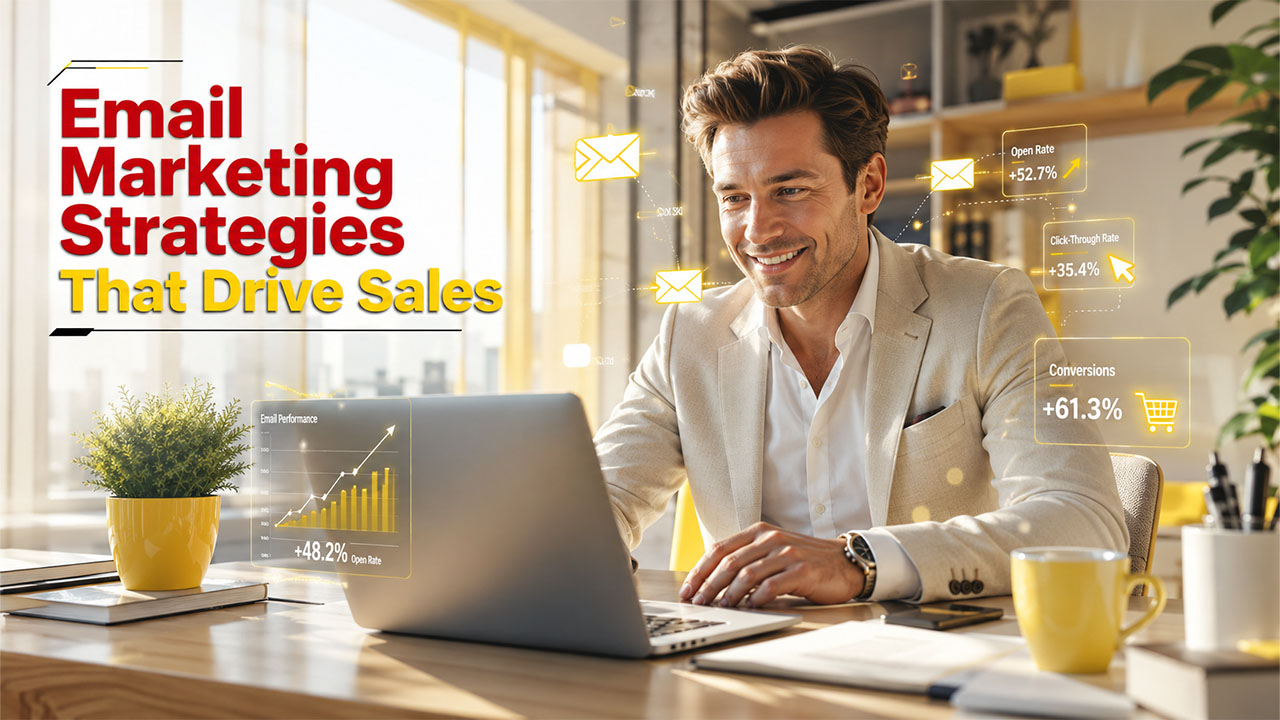
Most of the businesses spend hours crafting emails that prospects do not even open. They hit send, wait, and get nothing back, no clicks, no replies, and eventually no sales. If you believe this is a content problem, you must know that this is a strategy problem. Having the right email marketing strategies in place can change everything completely. Let’s break down exactly what works, why it works, and how you can start doing it right from today.
Why Most Email Campaigns Fail Before They Even Start
One of the biggest email marketing strategies mistakes that businesses make is jumping straight into writing emails without thinking about who they’re sending them to. Sending the same email randomly to thousands of people does not produce any results for you. People ignore emails that feel irrelevant to them.
A poorly targeted list is another key reason why open rates drop and unsubscribes spike. So, first the first step for a high-resulting and effective email marketing techniques, before you even write a single word, you need a clean, verified list of people who actually want to hear from you.
This is where tools like the Email Extraction Tool from ExtractMails come in handy. It helps you pull valid email addresses from the right sources, so you reach out to real people. Simply, a strong list is the foundation of every successful campaign.
Build a List That Actually Converts
All email lists are not created equal. A list containing 500 interested people will be more effective than one containing 5,000 uninterested individuals. Here, you need to prioritize quality, instead of quantity. All you need to do is focus on is adding the ones in your email lists who show a genuine interest in what you sell or offer. You can use lead magnets such as discount codes to attract their interest.
For example, a form that says “Get 10% off your first order” converts much better than one that just says “Subscribe to our newsletter.” Always try to tell people what they will receive and how often. Transparency builds trust from day one. The process of building a list that actually converts is consider among the best email marketing practices in 2026.
Segment Your Audience Like a Pro
One message does not fit everyone. Segmentation of your audience means dividing your email list into smaller groups based on shared traits.
For example, you can segment by location, purchase history, interests, or how recently someone signed up. When you send targeted messages to the right group of people, they feel like you’re speaking directly to them. This is one of the most effective email marketing techniques that separates good campaigns from great ones.
A new subscriber should get a welcome series. A loyal customer should get a reward offer. A cold contact needs re-engagement content. Treating each group differently gets you better clicks, better replies, and better revenue. Most email platforms make segmentation straightforward, even for beginners.
Write Subject Lines That Get Clicked

Your subject line is the first thing someone notices as soon as they open their inbox. If it does not grab attention in two seconds, the email gets skipped. Therefore, always keep subject lines shorter, ideally under 50 characters. Use curiosity, urgency, or a direct benefit to pull the reader in. Here are a few techniques that always work:
- Keep it personal. Using the reader’s first name increases open rates noticeably.
- Avoid spam trigger words. Words like “free,” “guaranteed,” or “act now” push emails into spam folders.
- Test two versions. A/B testing subject lines helps you figure out what your audience actually responds to.
- Ask a question. Questions must feel conversational and invite the reader to find the answer inside.
In simple terms, your subject line needs to feel human. Write like you’re texting a friend, not broadcasting to a crowd. This will ultimately increase email open rates.
The Right Email Structure Keeps People Reading
Once someone opens your email, you only have about 8 seconds to keep them interested. A good email has a curiosity-driven and clear opening hook, a relevant message, and one strong call to action.
Avoid saying five things at once. Just pick one goal per email and stick to it. Use short paragraphs and simple language. Avoid walls of text. Break ideas into small, easy-to-read chunks.
For example, if you’re promoting a service, lead with a problem your reader faces, explain how your solution helps, and end with a clear next step. This simple structure feels natural and guides the prospect without pushing them. It also shows how a good conversation flows.
Understand the Email Marketing Funnel
An Effective Email Marketing Funnel moves a subscriber from stranger to paying customer through a series of well-timed, well-crafted, and relevant emails. Think of it in three stages: awareness, consideration, and decision. At each stage, the content and tone should shift.
In the awareness stage, just educate the reader and add value. In the consideration stage, show proof, share case studies, and answer objections. Whereas in the decision stage, give a clear offer with a reason to act now. It is seen that most businesses skip straight to the decision stage and wonder why no one buys. Warming up or preparing your audience first makes the conversion feel natural, not forced.
Timing and Frequency Matter More Than You Think
Sending emails at the wrong time is another reason why emails get buried. Even if the message is great, the timing kills it. Studies consistently show that Tuesday, Wednesday, and Thursday mornings, usually between 9 AM and 11 AM, get higher open rates in almost all industries. Your audience may be different, so test your own data.
Frequency is just as important. Emailing very frequently feels spammy. Emailing too rarely means people forget who you are. A good starting point is once or twice a week. As you grow, pay attention to your unsubscribe rate. If it spikes after a certain frequency, dial it back. Remember, consistency and relevance always beat volume.
Use Personalization Beyond Just the First Name
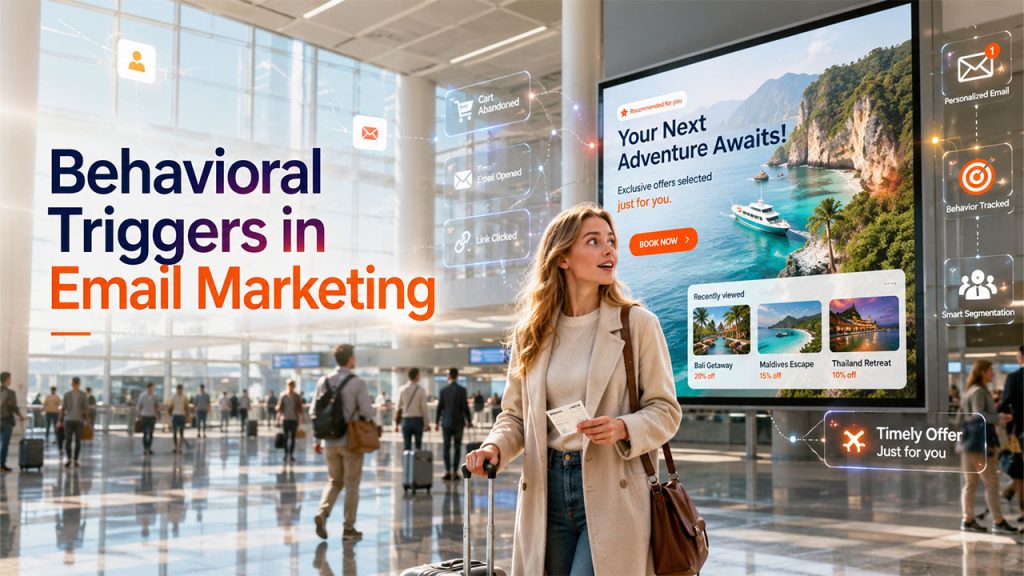
The real personalization goes deeper than adding someone’s name to the subject line. It means sending content that matches where they are in their buying process.
For example, if someone clicked on a product page but did not buy, send a follow-up email showing that exact product with a small incentive. Behavioural triggers are one of the best email marketing practices you can adopt. These are automated emails sent based on what a user does or does not do.
Welcome emails, cart abandonment reminders, and re-engagement campaigns all fall into this category. They feel timely and relevant because they are. Also, they save you time since they run automatically once you set them up. Creating personalized email content helps to increase email open rates.
Verify, Clean, and Maintain Your List
A dirty email list drastically hurts your deliverability. Sending to invalid or inactive addresses damages your sender’s reputation and pushes your emails into spam folders. Ensure you clean your list regularly by removing addresses that haven’t engaged in 90 days or more.
Tools like the Reverse Email Lookup Tool help you verify and understand who is on your list. Knowing more about your contacts helps you personalize better and avoid wasting effort on dead leads.
However, if you’re looking to grow your list with quality contacts from scratch, ExtractMails also offers Lead Generation Services that deliver targeted, verified leads for your niche.
Comparison of Tools for Email Marketing Success in 2026
Choosing the right email marketing tools plays a crucial role in high-performing email marketing strategies. Presently, users can choose from a long list of email marketing platforms, which includes popular tools like ExtractMails, MailChimp, MailerLite, and Brevo. These tools are not just email sending tools, but have evolved into a complete marketing ecosystem, which includes automation workflows, landing pages, and multi-channel communications.
The key comparison of all the major tools for a successful email marketing strategy is as follows:
| Tools | ExtractMails | MailChimp | MailerLite |
| Best For | Lead generation | All-in-one marketing | Small businesses |
| Key Features | Email extraction and verification | Automation and analytics | Automation and landing pages |
| Pricing | Affordable | Expensive | Affordable |
| Ease of Use | Easy | Medium | Easy |
Track Metrics That Tell the Real Story
Numbers tell you what’s working and what needs fixing. The metrics that matter most are open rate, click-through rate, conversion rate, and unsubscribe rate.
Open rate shows if your subject line is doing its job. One of the most effective ways to increase email open rates is to write subject lines that are specific, curiosity-driven, and relevant to where the reader is in their journey. Click-through rate tells you if your content is relevant. Conversion rate shows if people take the action you want. Do not obsess over vanity metrics. A high open rate means nothing if no one clicks. Focus on the full picture.
For instance, if your open rate is strong but your click-through rate is low, your email content may not be matching what the subject line promised. So, fix that disconnect, and you will notice that your results are improving quickly.
Conclusion: Stop Sending, Start Connecting
Every email you send is a great opportunity to build a real relationship, not just make a sale. The brands people love in their inboxes are the ones that feel helpful, honest, and human. They show up with value before they ask for anything. They make the reader feel seen. The email marketing strategies covered in this post are practical and can even complement broader outreach efforts like direct mail marketing when applied consistently.
In this regard, ExtractMails gives you the tools to build better lists, verify contacts, and generate leads that actually convert. That is where smart email marketing begins.
Frequently Asked Questions
What is email marketing, and what does it do?
Email marketing is a strategy that involves the direct delivery of messages in one’s email addresses using emails collected from people who are interested in the message being shared with them, and ensuring it is delivered at an appropriate time.
How do I boost my email open rates immediately?
To boost email open rates, pay attention to your email’s subject line, sender’s name, and timing of sending the email. Personal and relevant subject lines get more clicks, while using the names of senders helps create trust with the recipient immediately.
What are the most effective email marketing techniques for small businesses?
The most effective email marketing techniques for small businesses are list segmentation, welcome sequences, and behavioral trigger emails. These do not need a big budget, just the right tools and a clear understanding of your audience.
How often should I send marketing emails?
One to two emails per week is a reliable starting point for most businesses. Focus on consistency and relevance, and if your unsubscribe rate starts climbing, reduce frequency or improve your content.
What is an email marketing funnel, and why does it matter?
An Effective Email Marketing Funnel is a series of emails that moves a subscriber from first contact to final purchase. Most people do not buy right away, so a good funnel builds trust gradually and delivers the right offer at the right time.