





 Continue with Google

 Share on media
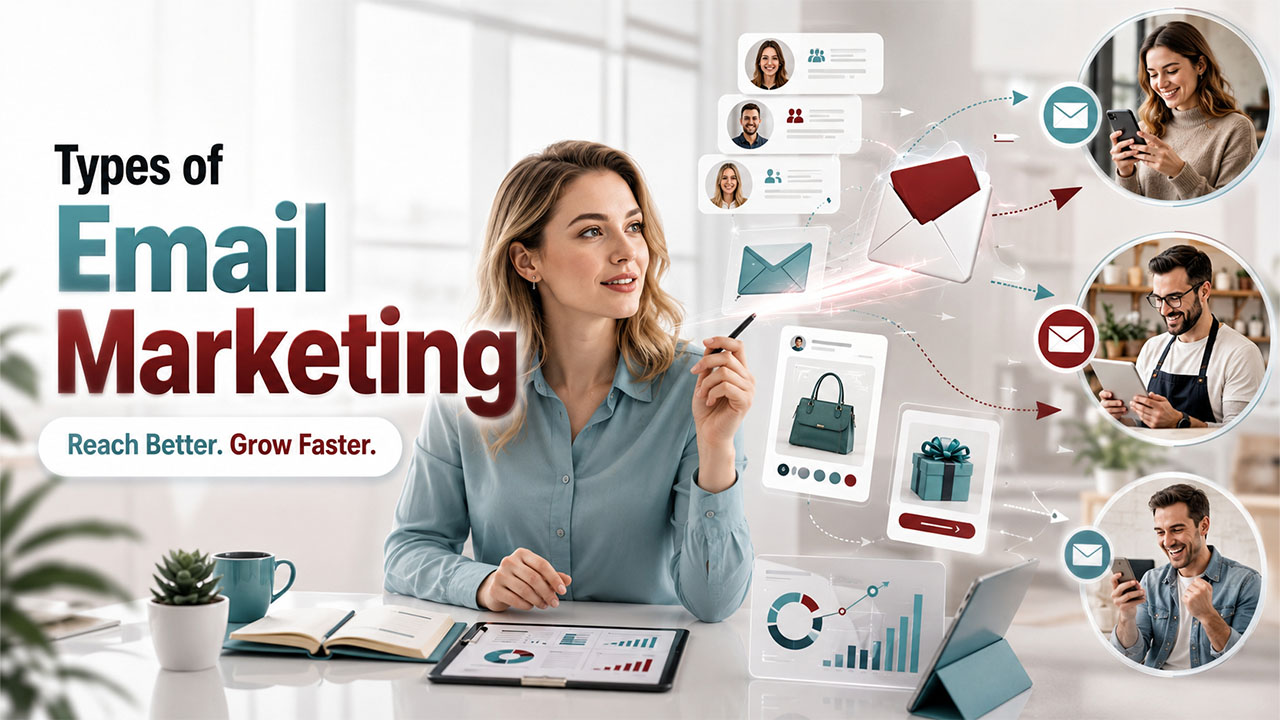
In the current modern digital era, email marketing is renowned as one of the most reliable and cost-effective strategies for businesses. There are various types of Email marketing strategies that guide marketers and businesses to connect with their desired audience. It allows businesses to build relationships with new clients, drive engagement, and achieve their campaign goals. Whether you are an experienced digital marketer or starting in digital marketing, it is essential to understand the different email marketing strategies to elevate your efforts into success. In this blog, we will explore 15 email marketing strategies to help you convert leads into customers and best practices to boost your performance.
What is email marketing?
Email is a professional communication method that businesses use to send emails to an individual or a group of people. Various email practices and strategies are used to engage with the target audience to boost the success of your marketing campaigns. These strategies can be used for various purposes, such as marketing a product, maintaining customer relationships, and sharing valuable insights.
How does email marketing work?
Email marketing works by sending direct messages to the target audience using a list of customers. It allows businesses to stay consistent by creating, scheduling, and automating their campaigns. Businesses ensure that their emails are more engaging and relevant by classifying the recipients into several groups and personalizing the content for each group. In addition to attracting recipients, this strategy builds strong relationships and increases the probability of achieving the expected results. To create an effective email marketing strategy, the campaign focuses on:
- Identifying the goal and purpose of your email campaigns.
- Create a customer list through sign-up forms, free ebooks, and discount codes.
- Write email content aligned with the audience requirement and interest.
- Measuring success through analytics to optimize future campaigns.
What are the benefits of email marketing?
Email marketing strategies have several benefits of email marketing for providing the best outcomes for businesses and individuals. Here are some listed:
- Measurable Results: Email marketing offers valuable insights and detailed metrics such as click-through rates (CTR), conversion rates (CR), and open rates for driving campaign success.
- Direct Communication: An email offers a direct connection to your audience and sends tailored emails to ensure your message lands in their inbox.
- Cost Effective: Email marketing campaigns are less expensive as compared to traditional methods. Email marketing delivers high ROI with minimal investment for businesses of all sizes and types.
- Personalization: It allows for hyper-personalized messaging, which improves engagement and relevance.
15 Types of Email Marketing Strategies Every Business Should Know:
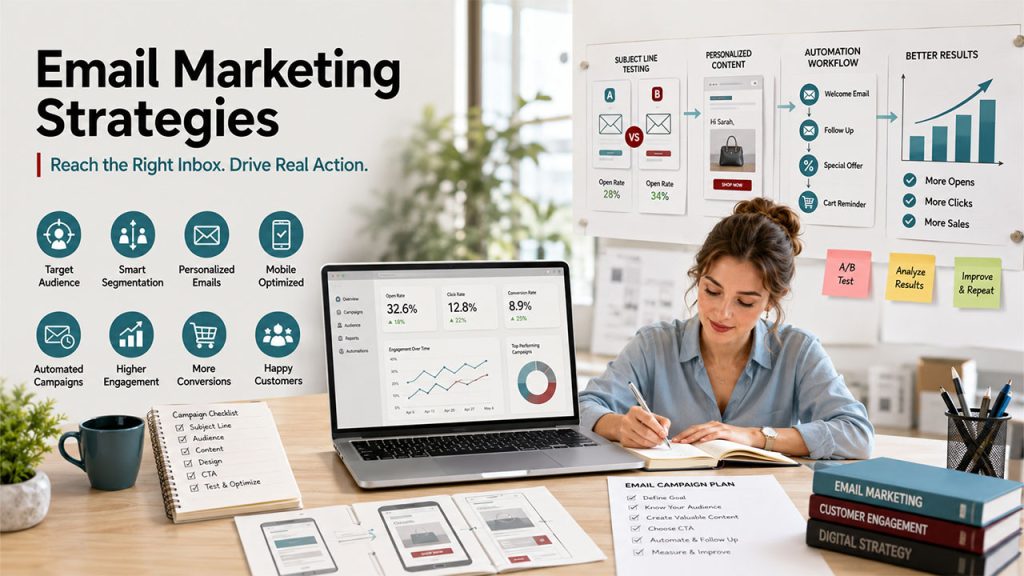
1. Write Compelling Subject Lines:
The subject line is the first impression of your mail to get the recipient’s attention. Ensure that it should be catchy, engaging, and relevant to attract customers and increase the open rate. An engaging subject line offers value or excitement towards readers, which increases the success of your email marketing.
Example: “Last Chance to Grab: Enjoy 50% off on Your Next Purchase!”
2. Define Your Target Audience:
Define your target audience before creating the email campaigns. Analyze by their interest, behavior, location, and last purchase history. This helps you to understand the customer requirements and helps you to meet their needs.
Tip: Know your customer’s requirements and desires by using surveys and previous purchase history.
3. Segment Your Email List:
Sending the same email to your entire list will impact your email strategy. As well as it affects your reputation and revenue of your email campaigns. Each person has different needs or interests; divide your customer list into smaller segments based on location, engagement, and purchase history.
Tip: Send re-engagement mail to inactive customers and send exclusive offers to loyal and active customers.
4. Make it Mobile-Friendly:
Mostly people use mobile to check emails; ensure the emails are readable on mobile devices, which includes readable font, easy-to-click buttons, and a responsive template.
Tip: Before sending emails, check your emails on different mobiles.
5.Create a Sense of Urgency:
Creating urgency by using time-sensitive language, limited-time offers, or countdown times encourages customers to take immediate action. This creates FOMO (fear of missing out) in customers; it helps encourage recipients to act quickly and boost conversions.
Example: “Hurry up! Only 2 hours left to book your seat in the Digital Marketing Workshop.”
6. Re-Engage Inactive Customers:
Retargeting is a method in which you reach out to inactive customers who show interest in your business but then tapered off. Re-engage with them by sending emails with exclusive offers or a friendly reminder about the value of your email.
Example: “We Miss You! Get 20% off on your favourite purchase.”
7. Monitor and Adjust Metrics:
Regularly monitor metrics like open rates, CTR, conversion rates, and unsubscribe rates; you gain valuable insights. Your emails will not be labeled as spam if you monitor your sender reputation, which is impacted by variables like spam complaints and bounce rates.
8. A/B Test Your Emails:
A/B testing allows you to experiment with different email designs, subject lines, and CTAs to see the effectiveness of your campaign. To identify the cause of failing the campaign, test one element at a time before sending it to the desired audience. Use the insights to modify and adjust the strategy to refine significant improvements.
9. Clear and Engaging CTA (Call-to-Action):
A strong CTA to encourage customers to take action and guide them on what to do next, like shopping, sales, or reading a blog. Use actionable words, visually appealing fonts, and create urgency to make your CTA visually stand out.
Example: “Enroll Now,” “Shop Now,” or “Learn More” use them in CTAs to maximize outcomes.
10. Set up automated campaigns:
Automated campaigns are one of the best methods of marketing strategies to keep your audience engaged. Automation in emails allows for anniversary and birthday discounts and cart reminders, which save time and real-time communication.
Example: Send a “Thank You for signing up” message after someone subscribes. Also use it for cart recovery emails, welcome emails, password reset emails, drip campaigns, etc.
11. Personalize Emails:
Using the recipient’s name is just one aspect of personalization. Use browsing history, preferences, or previous purchases to optimize content. Customized emails boost conversions and engagement. Your emails will be more captivating if you include discounts or product recommendations based on browsing history.Using the recipient’s name is just one aspect of personalization. Use browsing history, preferences, or previous purchases to optimize content. Customized emails boost conversions and engagement. Your emails will be more captivating if you include discounts or product recommendations based on browsing history.
For example: “Hi Salar, we thought you’d love these new arrivals!”
12. Focus on Quality Content:
Your emails should be valuable, whether in the form of entertaining stories, special offers, or practical advice. Trust is increased, and customers are encouraged to remain active by high-quality content.
13. Follow Email Guidelines:
Make sure your emails adhere to laws such as CAN-SPAM or GDPR. Always provide a link to unsubscribe and respond to requests right away. If you are open and well-mannered, your audience will trust you more and can build a strong connection. Long-term prosperity and reputation protection are ensured by compliance.
14. Provide Social Proof:
Highlight credibility, highlight client feedback, reviews, and user-generated content. Customers are more engaged when they see others have positive experiences.
Example: “See why 10,000 customers trust us.”
15. Organize a Contest with Freebies:
Contest invitation emails with exciting goodies create curiosity among your subscribers. A comprehensive contest that provides freebies or prizes to winners and participants can significantly boost the attention rate.
Common Email Marketing Mistakes to Avoid
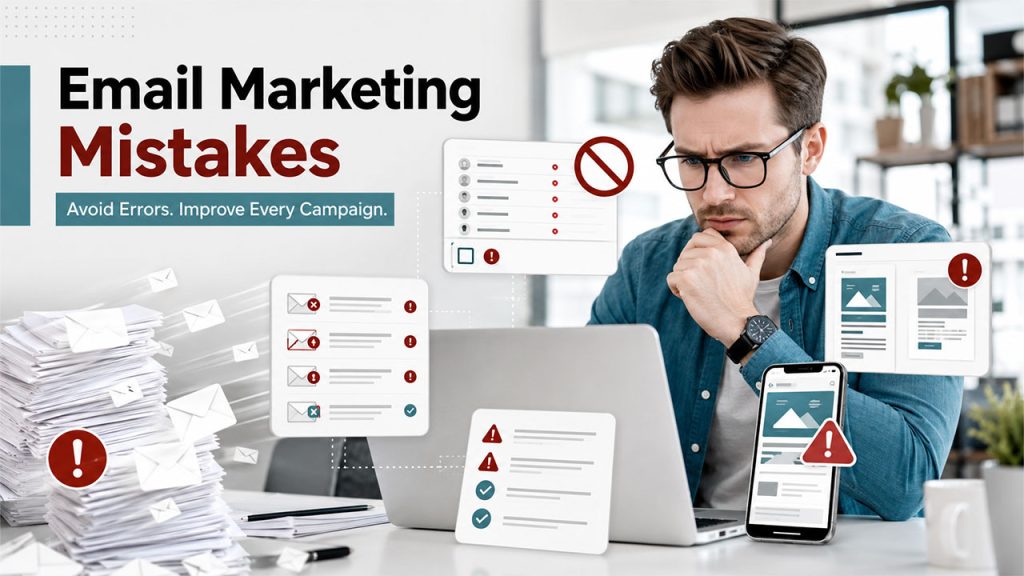
Even the best email marketing strategy can fail if you make common mistakes. Avoiding these errors helps improve deliverability, engagement, and conversions.
Sending Emails Without Permission
Always obtain permission before adding someone to your email list. Sending unsolicited emails can lead to spam complaints, damage your sender reputation, and even violate regulations like GDPR and CAN-SPAM.
Ignoring Email List Hygiene
Over time, email lists accumulate inactive subscribers and invalid email addresses. Regularly remove bounced emails and inactive contacts to improve deliverability and maintain a healthy sender reputation.
Sending Too Many Emails
Bombarding subscribers with frequent emails can increase unsubscribe rates. Create a consistent email schedule that keeps your audience engaged without overwhelming them.
Not Optimizing for Mobile Devices
Since most users open emails on smartphones, emails should be responsive, easy to read, and include mobile-friendly CTAs.
Forgetting to Test Before Sending
Always test subject lines, links, images, and email formatting before launching a campaign. A small mistake can reduce engagement and affect your brand’s credibility.
Best Practices for a Successful Email Marketing Strategy
Following proven best practices can significantly improve your email marketing performance and maximize ROI.
- Build your email list organically through sign-up forms and lead magnets.
- Personalize emails using subscriber names, interests, and purchase history.
- Segment your audience based on demographics and user behavior.
- Use compelling subject lines to increase email open rates.
- Keep your email copy short, valuable, and easy to scan.
- Include one clear Call-to-Action (CTA) in every email.
- Maintain a consistent sending schedule to build trust.
- Monitor key email marketing metrics such as Open Rate, Click-Through Rate (CTR), Conversion Rate, Bounce Rate, and Unsubscribe Rate.
- Continuously A/B test subject lines, email layouts, CTAs, and send times.
- Authenticate your domain using SPF, DKIM, and DMARC to improve email deliverability and reduce spam issues.
Conclusion:
Email marketing is still a vital component of effective digital marketing strategies. Businesses may increase engagement, build strong customer relationships, and meet their objectives through the implementation of these 15 strategies. Using these strategies will distinguish your campaigns, regardless of your level of experience as a marketer. To get the most from every email marketing campaign by developing a robust strategy, start putting these strategies into practice right now.
Frequently Asked Questions (FAQs)
What are the different types of email marketing?
There are several types of email marketing, including welcome emails, promotional emails, newsletters, abandoned-cart emails, transactional emails, product-recommendation emails, re-engagement emails, and event-invitation emails. Each type serves a different purpose throughout the customer journey.
Which email marketing strategy is the most effective?
There isn’t a single strategy that works for every business. However, audience segmentation, personalization, marketing automation, and A/B testing consistently deliver the highest engagement and conversion rates when combined.
How often should I send marketing emails?
The ideal frequency depends on your audience and business goals. Many businesses send one weekly or bi-weekly email to stay connected without overwhelming subscribers. Monitor engagement metrics to determine the optimal schedule.
How do I measure the success of an email marketing campaign?
Track important email marketing metrics such as:
- Open Rate
- Click-Through Rate (CTR)
- Conversion Rate
- Bounce Rate
- Unsubscribe Rate
- Spam Complaint Rate
- Revenue per Email
Analyzing these KPIs helps optimize future campaigns and improve overall performance.
Why is email segmentation important?
Email segmentation allows businesses to send relevant content to specific groups of subscribers based on demographics, interests, purchase history, or engagement levels. This improves personalization, increases open and click rates, and reduces unsubscribe rates.