
 Continue with Google

 Share on media
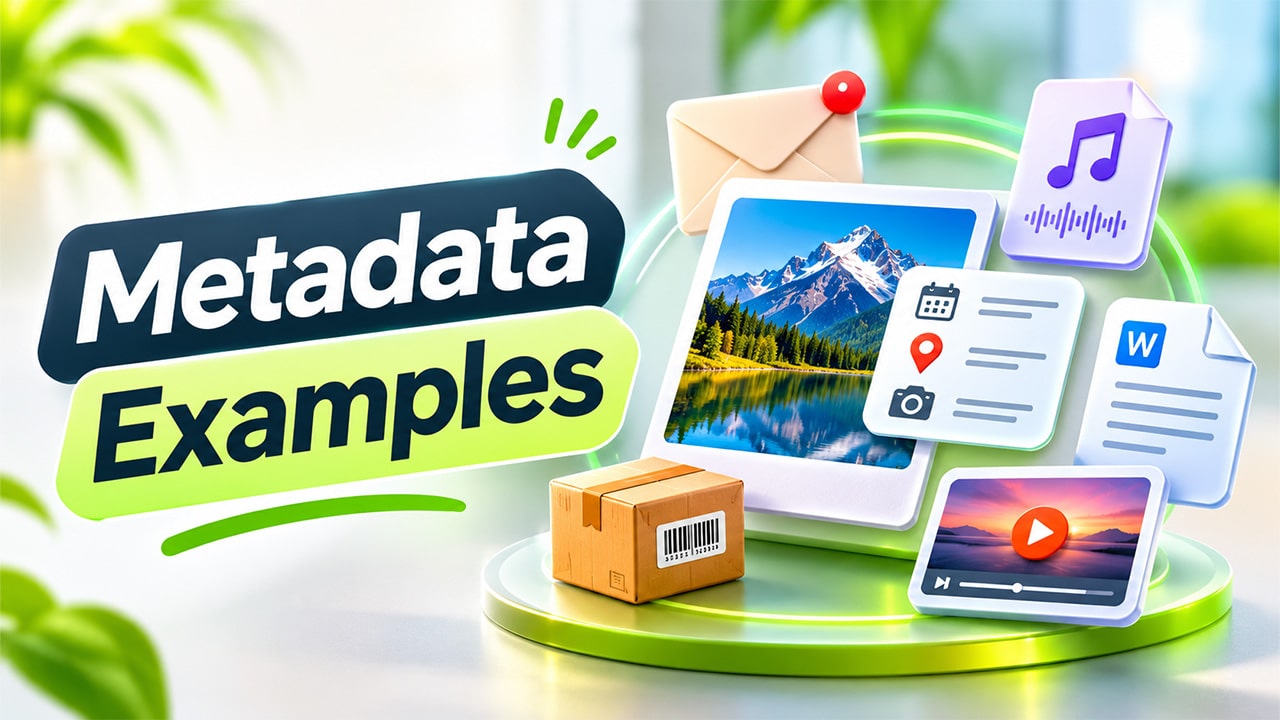
Every photo you take, every song you stream and every email you send carries a quiet companion: information about the information. This hidden layer is called metadata, and once you know where to look, you will see it everywhere. In this guide, we explore simple, practical metadata examples from everyday life, so you can understand how it works without any technical background.
Why Metadata Examples Make the Concept Easy to Understand
Metadata is often described as “data about data.” That definition is correct, but it can sound abstract. Real-life illustrations make it far easier to grasp. Think of a library book. The story inside is the data. The title, author, publication year, genre and shelf number printed on the catalog card are the metadata. They do not change the story, but they help you find, sort and understand it.
The same idea applies to the digital world. Phones, apps, websites and offices all rely on metadata to keep things organized. Below are clear examples of metadata you probably use every single day without noticing.
Everyday Metadata Examples You Already Use
You do not need to be a software engineer to deal with metadata. In fact, metadata in everyday life is so common that it has become invisible. Here are some of the most familiar places it appears.
Metadata in Photos and Videos
When you click a picture on your smartphone, the image file stores much more than the picture itself. It records the date and time, the camera model, the lens settings, the file size and often the GPS location where the photo was taken. This is why your gallery can group pictures by place or show you a “memories” album from exactly one year ago.
Metadata in Emails
An email has a body, which is the message you write. Around it sits metadata: the sender, the recipient, the subject line, the date and time sent, and technical details about the servers the message passed through. When you search your inbox for emails from last Tuesday, your email app is searching metadata, not reading every message.
Metadata in Music and Streaming
Open any music app and you will see the song title, artist, album, genre, release year and track length. All of that is metadata. It lets the app build playlists, suggest similar songs and show you artist pages. Without it, your music library would be one giant, unsorted list of audio files.
Metadata on Social Media
Every post you share has hidden details attached, such as the time of posting, hashtags, tagged people, location tags and the device used. Platforms use this information to decide what to show in your feed and to help you discover related content.
Real-World Metadata Beyond Your Phone

Metadata is not limited to screens. Real-world metadata appears in physical places too, and it has been used for centuries.
- Libraries: Catalog cards and digital library systems list the author, subject, ISBN and location of each book.
- Supermarkets: A barcode links a product to its name, price, weight and expiry date.
- Hospitals: Patient records include admission dates, doctor names and test timestamps that help staff track care accurately.
- Shipping and delivery: A parcel label contains the sender, destination, weight, tracking number and delivery status.
In each case, the metadata does not replace the actual item. It simply describes it so people and systems can handle it quickly and correctly.
Metadata Examples at a Glance
The table below summarizes common situations, what the main data is, and what metadata comes along with it.
| Where You See It | Main Data | Metadata Examples |
| Smartphone photo | The image itself | Date, time, location, camera model, file size |
| The message text | Sender, recipient, subject, timestamp | |
| Music app | The audio track | Artist, album, genre, duration, release year |
| Word document | The written content | Author name, creation date, last edited date, word count |
| Website | The page content | Title tag, meta description, keywords, publish date |
| Library book | The story or information | Author, ISBN, subject, shelf location |
| Online shopping | The product | Price, brand, size, color, customer rating |
| Video platform | The video | Title, tags, upload date, resolution, view count |
Metadata on Websites and Search Engines
When you search for something online, metadata is working behind the scenes. Every web page has a title and a short description that appear in search results. These are known as meta tags, and they tell search engines and readers what the page is about. A well-written meta title and description can help a page get found more easily and encourage people to click.
Online stores use the same idea. When you filter shoes by size, color and price, the website is sorting products using their metadata. Without those labels, finding the right item would take much longer.
Metadata in Work and Study

If you use Word, Excel or Google Docs, you already create metadata. Each file records who made it, when it was created, who edited it last and how large it is. Teams use this information to track versions, avoid confusion and find the latest copy of a report.
Students benefit too. Digital libraries and research portals let you search by author, year, subject or journal. That search is powered entirely by metadata, which saves hours of scrolling.
The Benefits of Metadata
Metadata may be invisible, but its impact is easy to feel. It helps in several ways:
- Faster searching: You find files, songs, photos and emails in seconds.
- Better organization: Information is sorted automatically by date, name, type or topic.
- Smarter recommendations: Apps suggest movies, music and products based on descriptive details.
- Improved record keeping: Businesses, hospitals and schools keep accurate histories of their data.
Privacy: The Other Side of Metadata
While metadata is useful, it can also reveal more than you expect. A photo’s location data might show where you live. A document’s author field might expose your name. For this reason, many people remove or limit metadata before sharing files publicly. Most phones let you turn off location tagging for the camera, and many apps allow you to strip details before uploading. A little awareness goes a long way in protecting your privacy.
Why Understanding Metadata Matters
As more of our lives move online, metadata becomes an important part of digital literacy. Knowing how it works helps you search smarter, organize better and share safely. If you are just starting out and want a clear explanation of the basics, learning what is metadata is the best first step, because it builds the foundation for everything covered in this article.
Conclusion
Metadata works quietly in the background, turning messy piles of information into organized, searchable and useful resources. From the photos on your phone to the books in a library, these real-life examples show how much we depend on it every day. Once you start noticing it, you will understand why it matters. To go deeper and explore the different categories, such as descriptive, structural and administrative labels, read more about the types of metadata and see how each one plays its own role.