
 Continue with Google

 Share on media
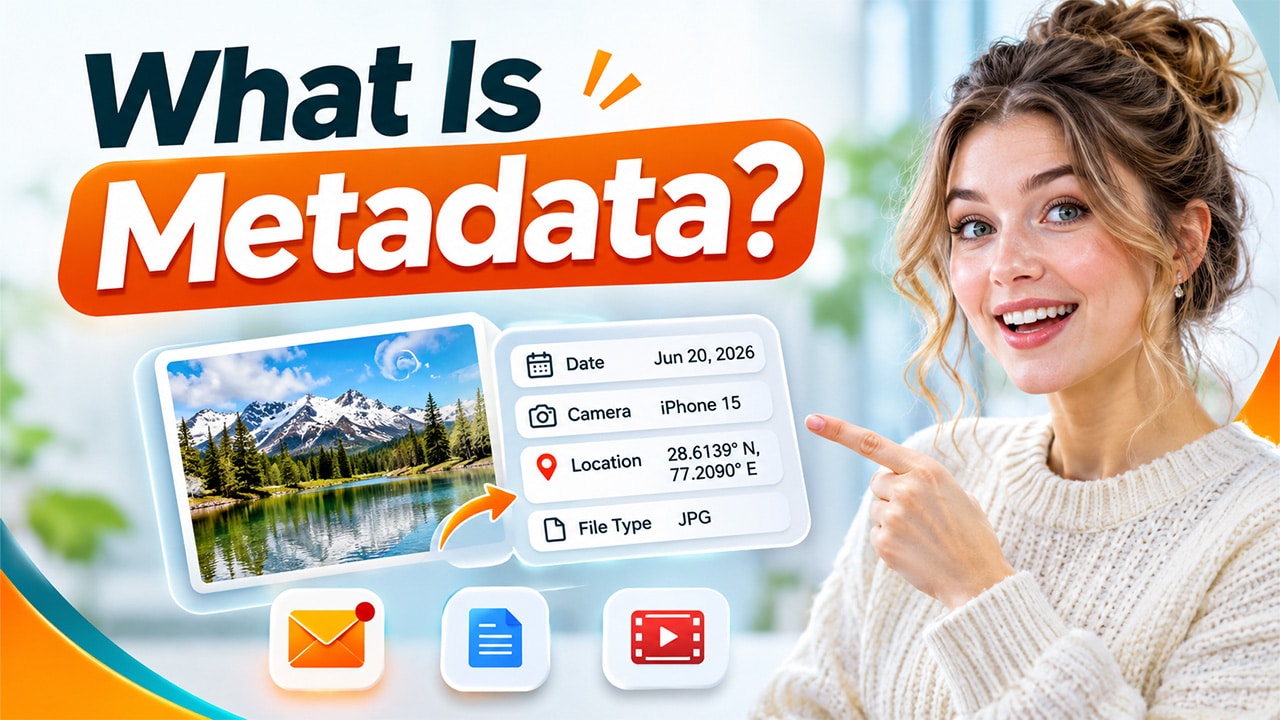
A friend of mine once posted a holiday photo on a community forum. Within an hour, a stranger replied with the name of her street. Nobody had told him anything. The picture itself had carried the GPS coordinates, quietly, in the background. That small scare is the best introduction to a topic most of us never think about, even though it shapes how we search, share, and store almost everything digital. Let’s unpack it properly, with examples you already use every day.
What Is Metadata? The Short Answer
Metadata is data about data: descriptive details that explain what a file, record, or message is, who created it, when, and how it can be used. Think of the catalog card in a library. The book is the content; the card is what helps you find it.
Your phone photos store the date, camera model, and location. A Word document remembers its author and last edit.
Three Types of Metadata
Specialists sort it into three groups. Once you can name them, the question of what is metadata stops feeling abstract.
Descriptive: titles, tags, and keywords that help people find content.
Structural: how parts connect, such as chapters in an ebook or tables in a database.
Administrative: file type, creation date, permissions, and copyright status.
One file can carry dozens of these labels at once, and you will rarely see them unless you go looking.
Why It Pays Off
Search engines use title tags and structured data to understand pages. Businesses track who edited which document version, and when. Good labeling saves time, reduces errors, and keeps information useful long after it was created.
Why Email Metadata Matters
Your inbox is one of the richest hiding places for this kind of detail. Every message carries sender and recipient addresses, timestamps, message IDs, server routing, and authentication results such as SPF and DKIM (checks that confirm a message really came from the domain it claims). You rarely see any of it, because it sits in the header. Security teams use it to spot phishing, and compliance teams use it to build audit trails.
From Inbox Clutter to Insight
Because email metadata is so structured, many companies mine it for operational value: response times, busiest hours, recurring senders, and support bottlenecks. An intelligent email parser can read incoming messages, pull out these fields, and push them into your systems without manual copying. Pair it with email data extraction from message bodies and attachments, and scattered messages become clean records for sales, finance, and service teams. Even a small team can start by exporting a month of message headers and looking for patterns. You may be surprised by what turns up.
What Is Metadata Management?
As organizations collect more information, keeping labels consistent becomes the real challenge. Metadata management is the practice of creating, organizing, storing, and maintaining metadata so people and systems can find, understand, and trust data across a company. Without it, two teams describe the same dataset in two different ways, and confusion follows. Start small: audit what you have, agree on a shared vocabulary, assign an owner to each key dataset, and build a simple catalog people can search.
What Is Metadata Worth to Analytics Teams?
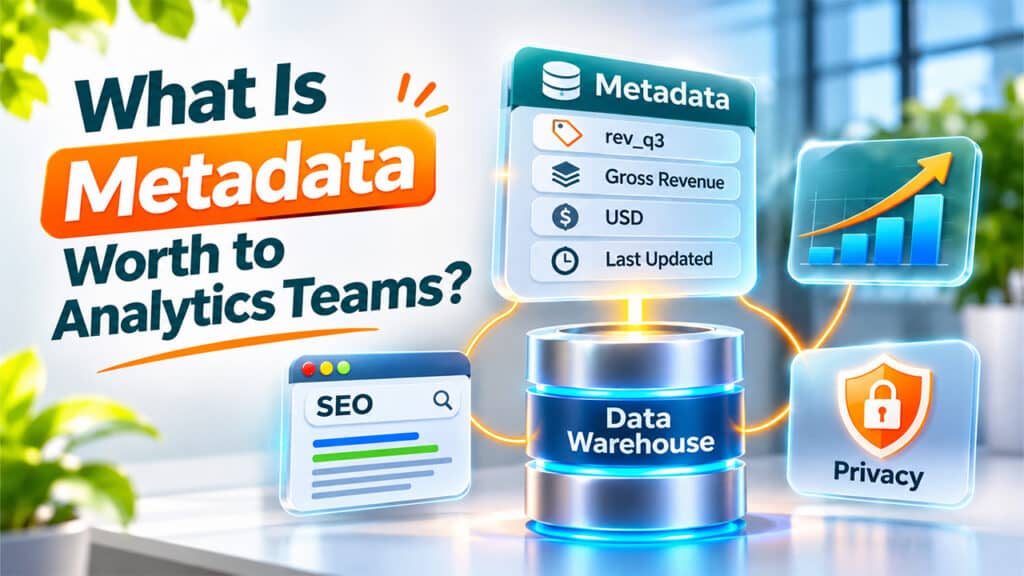
Picture a column labeled “rev_q3.” Metadata tells you whether it is gross or net revenue, in which currency, and who updated it last. This matters most inside a data warehouse, which pulls information from many sources into one place. Metadata records where each table came from, how it was transformed, and what each field means. Without it, a warehouse becomes a dumping ground.
Metadata and SEO
Websites rely on this too. Title tags, meta descriptions, and structured data tell search engines what a page covers, and they shape what you see in results. That is why anyone asking what is metadata in SEO terms ends up rewriting titles first. Titles influence rankings, while descriptions mainly affect whether people click. Add alt text to images and clear headings to pages, and you give both readers and crawlers an easier path.
The Privacy Catch
Hidden details can expose more than you intended, sometimes much more. A shared photo may reveal your home, and a document may show an editor’s name and revision history. Even a casual share, like forwarding a draft to a client, can leak who touched it and when. Email metadata can also expose server paths and internal IP addresses that attackers find useful. Before publishing, strip what you don’t need using built-in tools in most operating systems and office apps. Regulations like GDPR also treat some metadata as personal data.
Habits Worth Building
Keep naming conventions simple. Fill in descriptions and tags when you create a file, not months later. Automate capture wherever possible, because manual entry breeds typos and gaps. Review outdated labels regularly.
Four Common Myths
Myth one: the question of what is metadata only concerns IT teams. In reality, anyone who names a file or tags a photo creates it. Myth two: it is the same as the data. It is not; it describes the data. Myth three: it is always harmless. As the privacy section showed, it can reveal plenty. Myth four: only large companies need a plan. A freelancer with a tidy folder structure and consistent file names is already practicing the basics. Small habits compound faster than people expect.
Final Thoughts
By now, the question “what is metadata?” should feel less like jargon and more like common sense: it is the context that gives information its meaning. It is invisible, but its impact is everywhere, in the photos you sort, the emails you search, and the dashboards your company trusts. Start noticing it, manage it with care, and your data becomes easier to use and safer to share. Curious where to begin? Email metadata is a great first place to look, and an intelligent email parser can turn those hidden fields into structured records in minutes. Three steps for this week: audit one folder of files, write down shared naming rules, and check the headers of one email using your mail app’s “show original” option. None of this needs special software, only a little curiosity and the habit of asking what each label is really telling you.