 Continue with Google

 Share on media
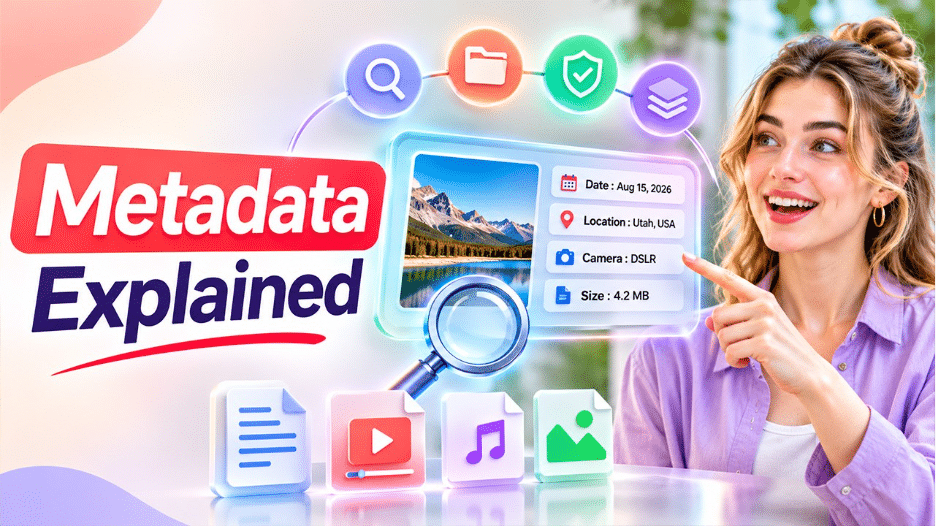
Every photo, document, song and web page carries hidden details that describe it. So, what is metadata used for? In short, it helps people and computers find, organize, understand and protect information. Without it, the digital world would be a giant pile of files that nobody could search or sort.
This guide explains the uses of metadata, the purpose of metadata and the importance of metadata in plain words, with real-life situations you already know.
A Quick Look at Metadata
Metadata is “data about data.” It does not change the content of a file. Instead, it describes the file: who made it, when it was created, how big it is, and what it is about.
Think of a book in a library. The story inside is the data. The title, author, publication year and shelf number on the library card are the metadata. You can find the book quickly because of that card, not because you read every page.
Why It Stays Out of Sight
Most of the time, metadata works quietly in the background. You only notice it when you sort files by date, search for a photo by location, or see a short description under a search result. That is exactly what metadata is used for: making information easy to handle without extra effort from you.
What Is Metadata Used For in Daily Life?
You use metadata dozens of times a day, even if you never think about it.
On Your Phone and Computer
When you take a photo, your phone saves the date, time, camera model and often the location. This lets you search “photos from last summer” or view pictures on a map. In the same way, your computer stores the creation date, last edit and author of every document.
On the Internet
Web pages use metadata such as page titles and meta descriptions. Search engines read these to understand a page and show it in results. Social media platforms also use metadata to create the preview card you see when a link is shared.
In Music and Video
Streaming apps rely on metadata like song title, artist, album, genre and release year. This is how they build playlists, suggest similar songs and show cover art.
Also Read: Metadata Examples in Real Life
Main Uses of Metadata
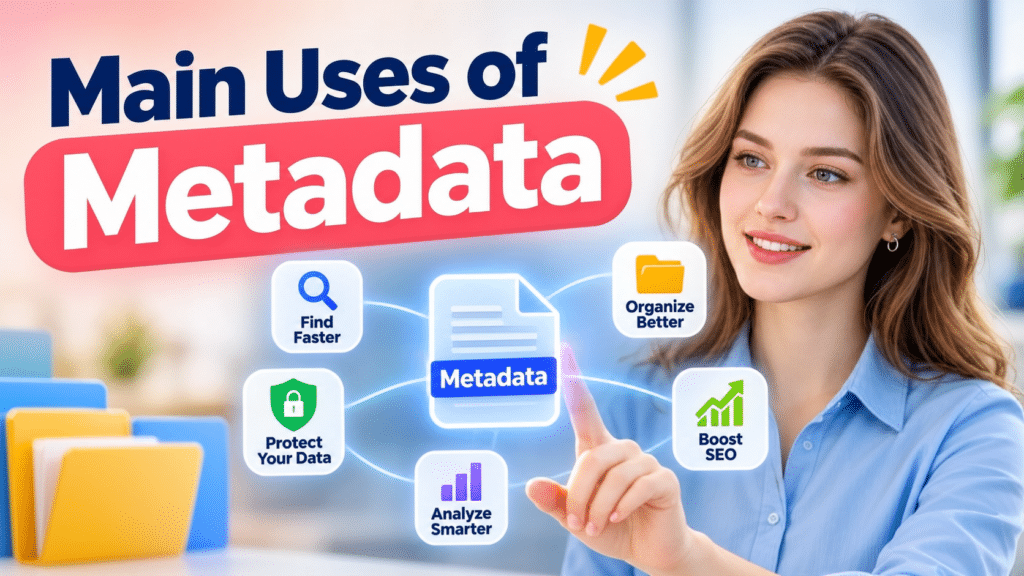
The uses of metadata go far beyond simple labels. Here are the most common ones.
1. Finding Information Quickly
Searching becomes faster and more accurate when files carry descriptive details. Instead of opening hundreds of documents, you can filter by author, date or keyword and reach the right file in seconds.
2. Organizing and Sorting Content
Metadata lets you group files by type, size, date or topic. Businesses use it to keep thousands of records tidy, and libraries use it to manage millions of books and articles.
3. Improving Search Engine Visibility
Websites use titles, descriptions and tags so search engines can understand their pages. Good metadata helps the right audience discover your content.
4. Protecting and Managing Rights
Metadata can store the creator’s name, copyright details and licensing terms. This helps photographers, writers and musicians show ownership of their work.
5. Tracking History and Changes
It records when a file was created, edited and by whom. This is valuable for teamwork, audits and legal records.
6. Supporting Data Analysis
Analysts depend on metadata to know what each column in a database means, where the data came from and whether it is trustworthy.
Purpose of Metadata at a Glance
The purpose of metadata changes slightly depending on where it is used. The table below shows the main types and what each one does.
| Type of Metadata | What It Describes | Common Example | Main Purpose |
| Descriptive | Content and subject | Title, author, keywords | Helps people find and identify items |
| Structural | How parts are arranged | Chapter order, page sequence | Keeps multi-part content organized |
| Administrative | Technical and management details | File type, size, access rights | Helps manage and control files |
| Rights | Ownership and usage | Copyright, license terms | Protects creators |
| Preservation | Long-term storage details | Format version, backup date | Keeps data usable for years |
As the table shows, each type serves a different job, but all of them make information easier to use.
Importance of Metadata for People and Businesses
The importance of metadata becomes clear when you imagine life without it. Imagine a phone gallery with no dates or a website with no titles. Finding anything would be slow and frustrating.
For Individuals
Metadata saves time. It helps you locate old photos, sort emails, manage music and keep personal files in order.
For Businesses
Companies handle huge amounts of data. Metadata helps them stay organized, follow legal rules, avoid duplicate work and make better decisions from reliable information.
For Websites and Marketers
Clear page titles and descriptions improve how a page looks in search results. That can lead to more clicks and visitors.
For Security and Trust
Metadata shows who accessed a file and when. This helps teams spot unusual activity and confirm that information is genuine.
Benefits of Good Metadata
Well-written metadata brings several practical advantages:
- Faster searching and easier retrieval
- Better organization of large collections
- Stronger data quality and fewer mistakes
- Clearer ownership and rights information
- Smoother sharing between people and systems
Privacy: A Note of Caution
Metadata is helpful, but it can also reveal more than you intend. A photo might include the exact location where it was taken, and a document might show the author’s name and editing history. Before sharing files publicly, it is wise to check and remove sensitive details. Most phones and office programs have settings for this.
Final Thoughts
Metadata may be invisible, but it keeps the digital world running smoothly. It helps you search, sort, protect and understand information every single day. If you are new to the topic and want a clear starting point, read our guide on what is metadata to build a strong foundation.
Now that you know what metadata is used for, you can create better descriptions for your own files, pages and photos, and share them more safely.