












 Continue with Google

 Share on media
A newsletter is a direct communication channel between merchants, organizations, creators, communities, and people who wish to hear from them. Instead of contacting each individual person, you can subscribe to their mailing list, which is a list of subscriber addresses, through which you can send a common message to multiple users who will have the same interest in your message content. A good mailing list is easy to subscribe to, well maintained, highly focused, targeted, and delivered on a regular basis. This blog uncovers: what is a mailing list, its types, benefits, and more.
What Is a Mailing List?
What Is a Mailing List? A mailing list is a group and systematic organization of email addresses that are used to send email to a number of people. While various organizations store addresses in an email service or database, a mailing list offers a method of contacting those interested in receiving content, announcements, newsletters, or a promotion.
Other things matter besides quantity. Besides commercial email customers, those entities must have specific sender information, a recognizable headline, a real physical address, and a working opt-out option in order to qualify to send email under CAN-SPAM. US recipients have to respond to opt-outs in a timely fashion, says the FTC.
How Does a Mailing List Work?
Typically, a mailing list process goes like this: A user supplies an email address, which is stored in a contact database; the subscriber receives an email where they are notified of the type of communication they’ve signed up for, and stats are logged. Understanding “what is a mailing list” also becomes easier by looking at how subscriber information moves from signup to message delivery and ongoing management.
- Subscriber Signup: A business gathers addresses using a sign-up form on their website, with the content offer, or on the account page. The form should specify what the subscribers will receive.
- Organize Contacts: List contacts and group them. For instance, one can categorize the new subscribers, repeat buyers, and preferences by categories, etc.
- Messaging and Delivery: The sender writes a message and chooses the recipients. The platform distributes messages. The Bulk Email Sender allows for high-volume delivery without creating individual messages by hand.
- Monitoring and Maintenance: Email systems report statistics like clicks, bounces, and unsubscribes. Should be purged for misspelled addresses and repeated bounces. Respect any requests to be unsubscribed.
How to Make a Mailing List?
Start with a clear audience and a specific reason for people to subscribe. Add a visible signup form to relevant website pages and explain what subscribers receive. Offer useful content, discounts, updates, or another appropriate incentive. Use an email platform to store contacts and manage subscriptions. Avoid purchasing random databases because permission and address quality can be difficult to verify. The FTC notes that purchased lists can create compliance and deliverability risks.
Mailing List vs Email List: What’s the Difference
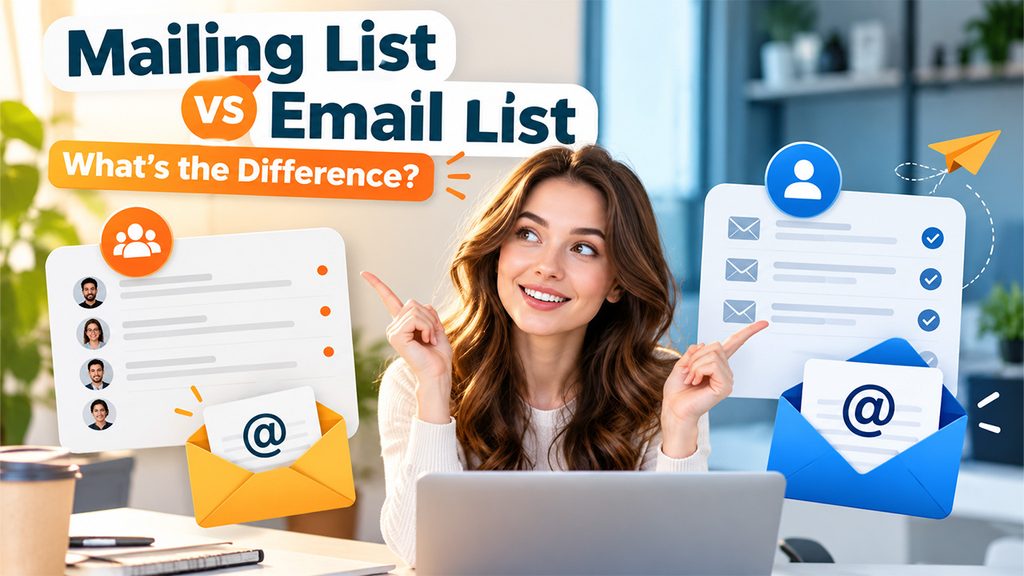
The difference usually depends on context. Both can contain email addresses and subscriber information, and both can use software to distribute messages. An Email list vs. mailing list comparison is mainly about purpose and usage.
| Aspect | Mailing List | Email List |
| Main Purpose | Group communication | Subscriber communication |
| Typical Content | Updates, announcements, discussions | Promotions, newsletters, educational content |
| Audience | Customers, members, communities | Prospects, customers, subscribers |
| Segmentation | Basic or detailed | Often detailed |
| Marketing Focus | Varies | Usually strong |
For marketers, the label matters less than relevant contacts, useful messages, preferences, and accurate data.
What Are the Types of Mailing Lists?
Mailing lists can be used in different ways. For instance, business owners can use multiple mailing lists to segment their subscribers or appeal to different buyers’ interests or journey stages.
- Newsletter Lists
Newsletter lists contain information about the company’s news, educational resources, industry insights, or other relevant information. Companies use such lists to communicate with customers and keep them updated.
- Promotional Lists
Promotional lists are used to share sales, special offers, discounts, news about products and services, and other commercial information with interested buyers.
- Transactional or Customer Lists
This type of mailing list is used to send transactional or customer-related emails to the subscribers, such as order confirmation, receipt of goods or services, or other relevant information related to the customers’ activity on the company’s website. Transactional lists are separated from other mailing lists to avoid spamming.
- Interest-Based Lists
An interest-based mailing list is created based on customers’ interests, products, services, or other interests. It is a great way to send targeted information without bothering all the company’s subscribers.
- Internal or Community Lists
Some companies, educational facilities, associations, communities, and organizations use mailing lists to send internal information to their employees, volunteers, participants, subscribers, or other members.
What Are the Benefits of Mailing Lists?

A properly maintained mailing list provides businesses with a direct line of communication and ensures consistent customer relationships. It also ensures you’re able to communicate with a specific audience without relying on other marketing tools. Email tools can also support Email Nurturing by sending timely follow-ups and relevant content based on subscriber actions and interests.
- More Targeted Audiences: With more detailed segmentation of interest, geographical location, purchase history, subscription source, etc., you can filter contacts. Segmentation is great for sending different content to various groups of people. It also minimizes the number of unneeded messages by accommodating subscriber data.
- Automation and time saving: Email tools can deliver welcome emails, follow-up emails, reminders, newsletters, campaigns, etc. This greatly reduces a company’s workload. It will also allow companies to be consistent without having to send all messages themselves.
- Quantifiable Results: Clicks, conversions, and unsubscribes can all be tracked. These factors enable marketers to see which campaigns are successful. These figures can also be used to tailor your next batch of email marketing campaigns to how your customer is already behaving.
- Economical Communication: Email allows the delivery of the content to a significant number of recipients at a relatively low distribution cost. It is a viable alternative for those who like to stay in touch frequently.
- Better 1st-Party Relationships: A permission-based database is a company’s owned communication asset. Marketers can build an email list by establishing authentic relationships. Maintaining up-to-date subscriber data and honoring subscriber preferences can preserve that relationship. This, over time, can lead to a more dependable audience for future messages.
Conclusion
A mailing list is the best way for a business to speak directly to a predetermined list of email subscribers with newsletters, promotions, updates for clients, information for communities, and automated campaigns. It’s more than just subscribers: its usefulness depends on the right acquisition techniques, the way the contacts are stored, the content of the messages, segmentation, standard cleaning, and subscription procedure.
The hidden meaning of “What is a mailing list” is that, in the practice of marketing, this is a tool for better address collection and interaction. Ethical practices with email outreach and cleaning can lead to better engagement and greater results.