

 Continue with Google

 Share on media
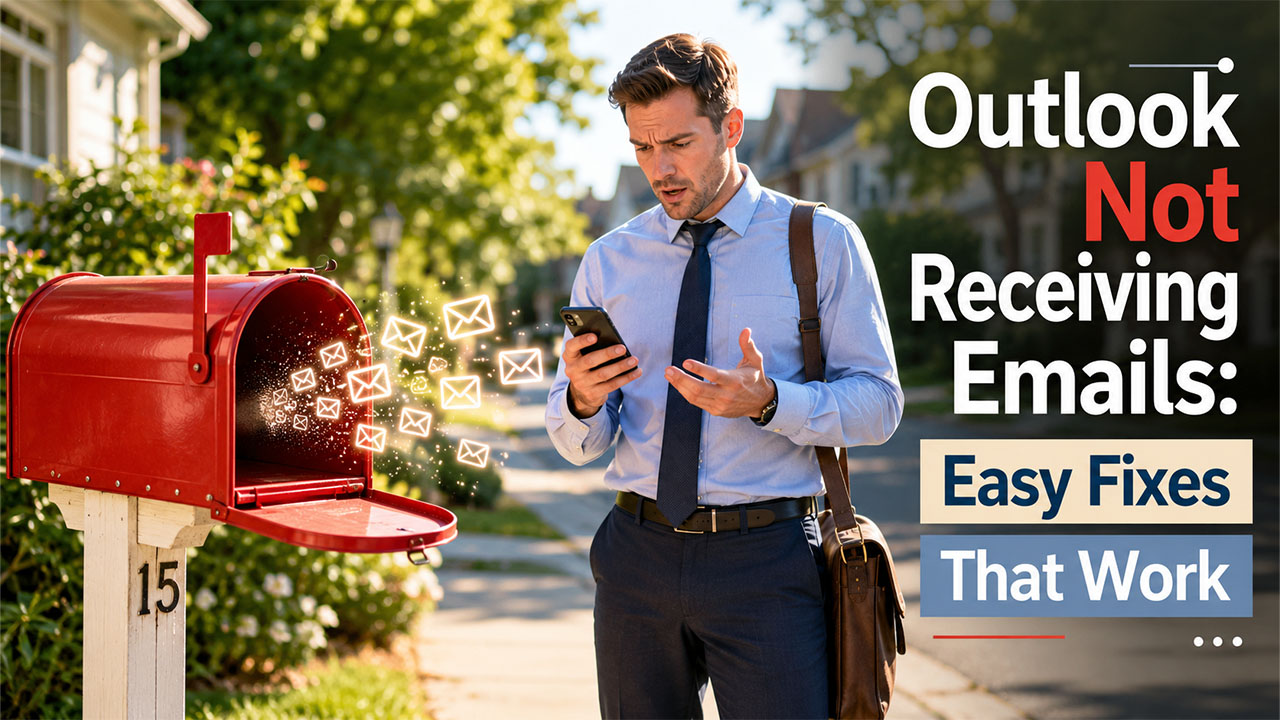
You keep hitting refresh, but nothing new shows up. Someone told you they sent an email hours ago, and your inbox is still sitting there empty. It’s a strange kind of frustrating, because everything else about your day is running fine, just not this.
The good news is that this affects many people, and usually, things are not as bad as they seem. It is usually something minor: an accidental change of settings, a folder silently collecting mail you don’t even notice, or storage that unexpectedly fills up. You can also explore other common why am I not receiving emails issues to understand broader email delivery problems.
In this blog, we’ll walk through every real reason Outlook stops receiving emails, along with the exact steps to fix each one, so you can stop guessing and get your inbox working again.
Your Inbox Looks Empty, But the Email Was Sent
The first thing to figure out is whether the problem is on your end or the sender’s end. At times, the sender typed your address wrong, or their mail server had a minor hiccup. Before digging into your settings, verify the email address with the sender. A small typo means the email goes somewhere else entirely, and Outlook never even sees it.
Ask them to check their Sent or Outbox folder to confirm the email actually went out. Once you rule out the sender’s side, you can focus on your own Outlook account.
The Junk Folder Is the First Place to Look
Outlook’s spam filter is advanced, but it is not perfect. It sometimes grabs a completely normal email and tosses it into the Junk Email folder without asking you. This is one of the most common reasons people ask why I am not receiving emails in Outlook, even though the emails actually arrived, just in the wrong folder.
Open your Junk Email folder first and scroll through it carefully. If you spot an email that does not belong there, follow these steps:
- Right-click the email and select “Not Junk.”
- Go to Settings and open Junk Email
- Find the Safe Senders list and add that sender’s email address
- Save the changes
Outlook will now deliver that sender’s messages straight to your inbox every time.
Focused Inbox Is Secretly Sorting Your Mail
Microsoft added a feature called Focused Inbox a few years ago, and it quietly splits your inbox into two tabs, “Focused” and “Other.” Important emails go to Focused, and everything else lands in “Other”. The problem is that Outlook decides what counts as important, and it does not always get that right.
Check the “Other” tab in your inbox first. Important messages from clients, colleagues, or services you use often end up sorted there without any warning. If you find emails that belong in your main inbox, here is what to do:
- Right-click the email sitting in the Other tab
- Select “Always Move to Focused”
- Confirm the action if prompted
Outlook will now route all future emails from that sender directly to your Focused inbox.
Going Offline Without Even Knowing It
Outlook has a Work Offline mode that lets you disconnect from email servers on purpose. It is useful when you want to work without distractions, but it can also turn on by accident. When Outlook is in offline mode, it stops syncing completely and pulls in zero new emails.
Look at the bottom status bar of your Outlook window. If it says “Working Offline,” that is your problem. Let’s fix it:
- Click the Send/Receive tab at the top of the screen
- Click “Work Offline” to toggle it off
- Wait a couple of minutes for Outlook to reconnect
- Check your inbox once the status bar shows “Connected.”
Once done, your emails should start coming in as soon as the connection is restored.
Your Send/Receive Interval Is Set Too Long
Sometimes Outlook isn’t broken at all; it’s just not checking for new mail as often as you’d expect. By default, Outlook checks on certain intervals, but if this interval was somehow modified or changed to manual, you may have emails that sit on the server without ever getting into your inbox.
- Go to File, then Options, and click Advanced.
- Scroll down to the Send and Receive section and click Send/Receive.
- Check the number next to “Schedule an automatic send/receive every __ minutes”.
- If it’s set high, lower it to something like 1-5 minutes and make sure the box is checked.
- Click Close, then restart Outlook.
Once that interval is short and active, Outlook checks the server regularly instead of leaving you waiting on a manual refresh.
Email Rules and Filters Set Up Against You
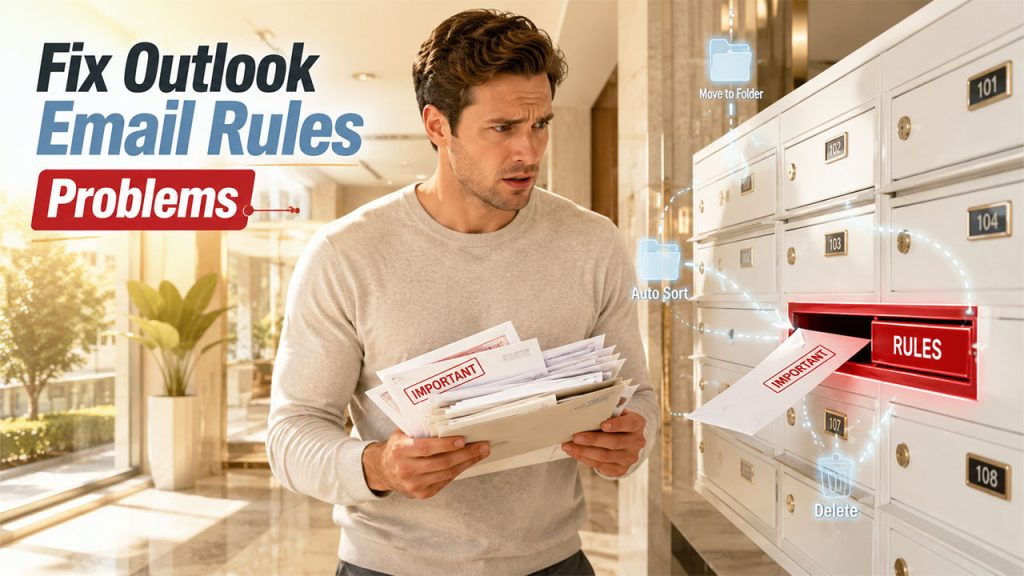
This one trips people up constantly. Outlook lets you create rules that automatically sort, move, or delete incoming emails. These rules help stay organized, but a wrongly set rule can quietly reroute important emails to folders you never open, or even delete them without a trace.
Go to File and select “Manage Rules and Alerts.” Work through each rule carefully and look for anything that could be intercepting your incoming mail. Here is how to do it:
- Open Outlook and click on the File tab
- Go to Manage Rules and Alerts from the dropdown menu
- Read through every active rule on the list
- Disable or delete any rule that seems like it could be blocking emails
- Also, check if any rules are forwarding emails to an old address you no longer use
Storage Limits Can Silently Shut Your Inbox Down
You may feel surprised, but when your Outlook mailbox hits its storage limit, new emails stop arriving. Outlook does not send you a loud alert about this. The emails just stop, and you are left confused about what went wrong. This issue can also happen in systems like Army Webmail, where mailbox storage and strict server limits are enforced.
Microsoft gives most Outlook accounts around 50GB of storage, and Microsoft 365 accounts can reach up to 100GB. That sounds like a lot, but years of attachments, old newsletters, and large files add up fast. Check your storage under File, then Info, and look for the Mailbox Cleanup option.
To fix this issue, delete old emails with large attachments, empty your Deleted Items folder, and move large files to OneDrive. Once you free up enough space, new emails should start flowing in again.
Blocked Senders You Forgot You Added
A lot of people block senders in Outlook and then completely forget they did it. If you blocked someone in the past and now expect emails from them, those emails go straight to your Junk folder automatically. Outlook follows blocked sender rules very strictly and does not make exceptions.
Go to Settings, then Junk Email, and look at your Blocked Senders and Domains list. If the sender you are waiting on is listed there, remove them right away. Also, add them to your Safe Senders list so their future emails land directly in your inbox without any trouble.
Clearing the Cache Can Fix More Than You Think
Your Outlook stores cache files on your computer to help with its performance. When these cache files are corrupted, it might lead to various synchronization issues, including emails not showing up.
Thankfully, purging the cache will not result in loss of your emails, as well as loss of account details. All it does is refresh the temporary files that Outlook uses.
Close Outlook first, then follow these steps:
- Press the Windows key + R at the same time
- Type %localappdata%\Microsoft\Outlook in the box that appears
- Hit Enter and open the RoamCache folder
- Delete all files inside that folder
- Restart Outlook and check if new emails start arriving
This fix clears stored cache data that often blocks Outlook from syncing properly.
Wrong Server Settings Can Quietly Kill Your Inbox
Changing your password or switching to a new device sounds simple. But Outlook still remembers the old connection details, and if those details no longer match your mail server, new emails simply stop arriving. Most people refresh their inbox ten times before realizing the problem is not the internet, it is the settings underneath. In many cases, users even start searching “Is Outlook Down” before discovering that the issue is actually caused by incorrect server settings.
Go to File, then Account Settings, and look at your incoming server details. For Microsoft 365, the server address is outlook.office365.com, port 993, SSL on. One wrong digit in the port number is enough to break the whole connection. To fix this, follow the steps below:
- Open the file and click Account Settings
- Select your account and hit Change
- Check the incoming server address and port number
- Confirm SSL encryption is turned on
- Save and restart Outlook
The Problem Might Not Even Be on Your End

This one frustrates people the most. You check everything, nothing looks wrong, and emails still are not coming in. Microsoft’s servers do go down occasionally, and when that happens, no setting change on your side will fix it.
Search “Microsoft 365 service status” and check the official dashboard. A red or yellow indicator next to Outlook confirms a live issue. Searching #Outlookdown on social media also shows you fast if thousands of other users are stuck in the same situation. Sometimes the only honest answer is to wait it out.
Your Antivirus Might Be the One Blocking Emails
Though security software is supposed to protect your device, most of the time it does a decent job. But occasionally it gets overly cautious and flags Outlook’s connection to the mail server as suspicious traffic. Because of this, emails get blocked before they ever reach your inbox.
In that case, all you should do is pause your antivirus temporarily and see if incoming mail starts moving again. If it does, the fix is straightforward.
Simply, add Outlook as a trusted exception inside your security software, then turn your antivirus back on immediately. Testing with it fully off is fine for a minute, but leaving it off is not worth the risk.
An Outdated Outlook Version Can Break Things Silently
Old app versions carry old bugs. Microsoft pushes updates regularly to patch syncing issues, and if you have been ignoring those update prompts, one of those unpatched bugs might be exactly what stopped your emails from arriving.
Desktop users should go to File, then Office Account, then Update Options, and click Update Now. Phone users just need to open their app store and check for a pending Outlook update. After updating, users can also explore useful features like Outlook dark mode settings to improve visibility and overall email experience. Restart the app after updating and give your inbox a minute to catch up.
Conclusion: Fix It Once and Stop Going in Circles
If you ever face not receiving emails in Outlook again down the road, the fixes above cover the real causes, not just surface-level advice, so you already know exactly where to look first.
Outlook is a tool most people rely on every single day. Giving it a quick check every few weeks, including storage levels, app version, and server settings, takes less time than dealing with a broken inbox at the worst possible moment. Small habits keep the bigger problems from showing up. Building these routines alongside practical workplace productivity hacks can help reduce technical interruptions and improve daily workflow efficiency.