












 Continue with Google

 Share on media
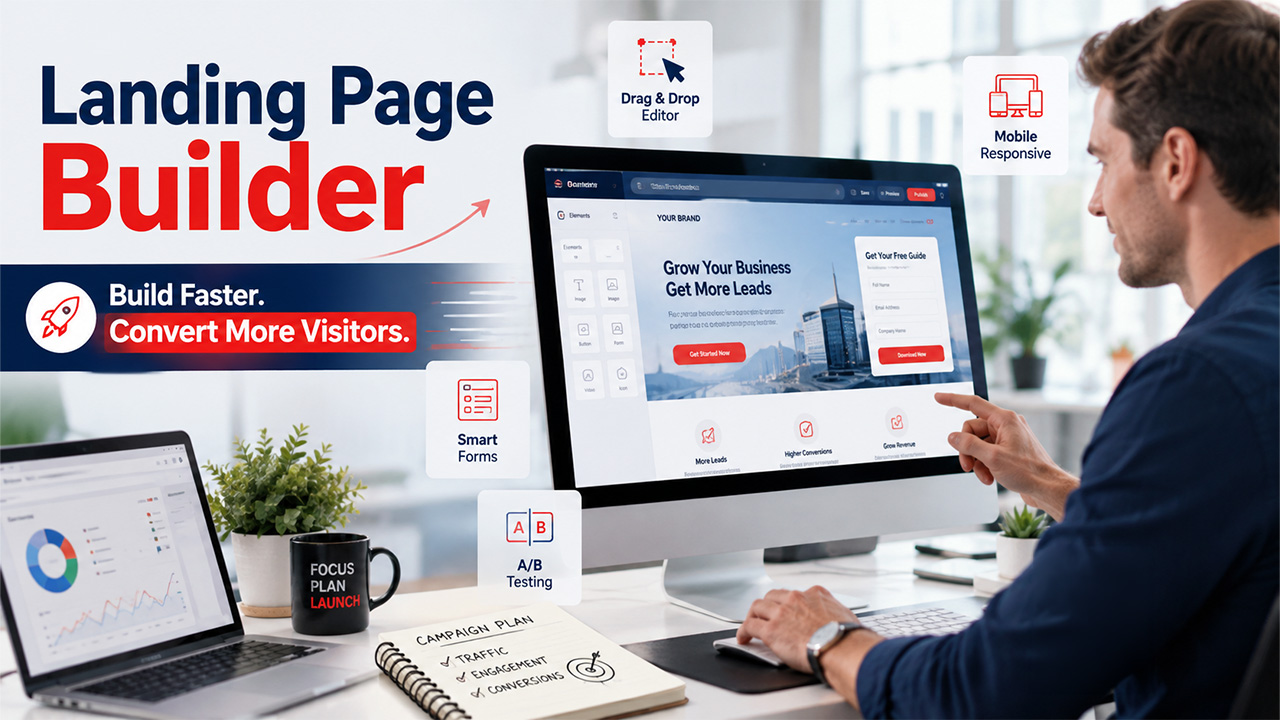
The article explores in detail what a landing page builder is, what its essential features and benefits are, and how to choose the right one for your business.
In the present digital marketing ecosystem, attracting visitors to the business website is only considered half the main effort. The real challenge is converting those visitors into leads, subscribers, or customers. This is where landing pages play a critical role for businesses and form an important part of a successful Growth Marketing approach by helping companies attract, engage, and convert potential customers effectively.
Creating a professional landing page from scratch often requires various skills like coding, design expertise, and valuable development time. To streamline this process, businesses generally rely on landing page builders. These tools can simplify the entire process of creating high-converting landing pages without requiring any technical knowledge.
What is a Landing Page Builder?
A landing page builder is a specific type of software tool that is used to create, customize, and publish dedicated web pages, which are designed to achieve a specific marketing goal. Unlike a traditional website builder, which focuses on creating a multi-page website, a landing page builder mainly focuses on designing single-purpose pages that encourage visitors to take one clear action, such as filling out a form, downloading an ebook, or making a purchase.
Most of the popular landing page builders available offer an intuitive design, with a drag-and-drop editor, which allows users to build professional-looking pages without any coding or design experience. The tool also offers various attractive pre-designed templates, along with customizable forms, call-to-action buttons, and multimedia elements.
The landing page builder also includes various key features, such as A/B testing, analytics, mobile-responsive layouts, SEO settings, email marketing platform integration, and other capabilities. This helps businesses optimize their campaign, efficiently track performance, and improve conversion rates over time.
Key Features of a Landing Page Builder
A landing page builder offers various key features. Some of the key capabilities of a landing page builder are as follows:
- Drag-and-drop Editor
The tool offers users a simple drag component into place and customizes layouts visually, instead of coding HTML or CSS. This helps reduce development time significantly, while also making landing page creation accessible to non-technical users.
- Ready-to-Use Templates
Most landing page builders include professionally designed templates, which are optimized for various goals, such as lead generation, product launches, webinar registration, event promotion, sales pages, and newsletter subscriptions.
- Mobile Responsiveness
An ideal landing page builder automatically creates responsive designs that can easily be adapted to different screen sizes, without requiring any additional coding. This ensures a consistent experience across multiple platforms, such as desktops, tablets, and mobile devices.
- Form Builder
Landing page builders generally include customizable forms that allow businesses to collect names, email addresses, phone numbers, company information, survey responses, and custom fields. These collected details can be used to implement effective Email Marketing Strategies, allowing businesses to nurture leads, share valuable content, and build long-term customer relationships.
- A/B Testing
The builder also includes A/B testing functionality, which allows marketers to compare two versions of the same page simply by changing a few elements, such as headlines, images, CTA buttons, colors, and form length.
Benefits of a Landing Page Builder
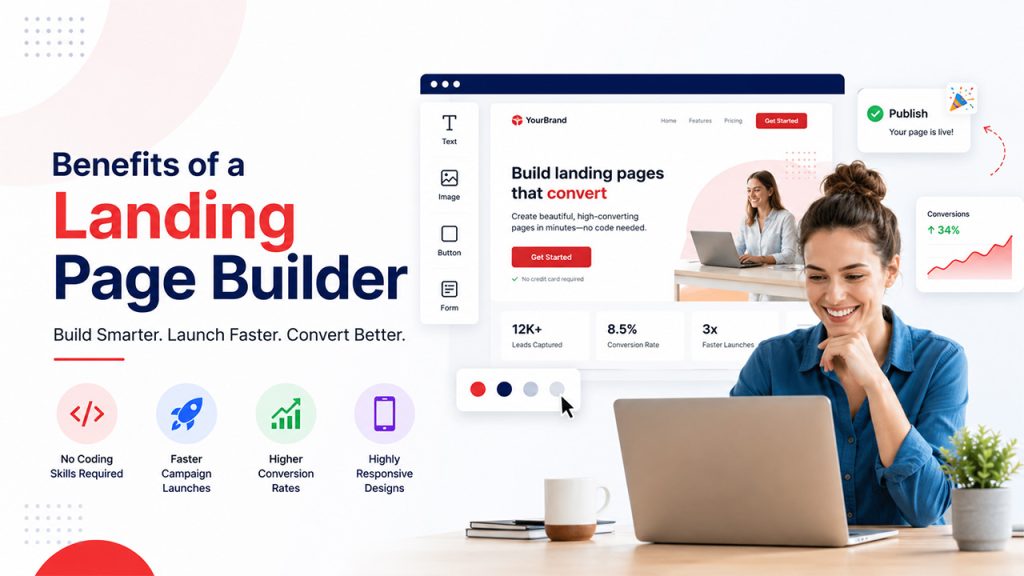
A landing page builder offers key benefits to businesses, marketers, and entrepreneurs, as it helps simplify the entire process of creating high-converting landing pages.
Some of the key benefits of a landing page builder are as follows:
- No Coding Skills Required
A landing page builder eliminates the need for technical expertise, as most tools feature drag-and-drop editing, allowing users to add text, images, forms, and other elements without writing a single line of code.
- Faster Campaign Launches
The landing page builder enables businesses to create and publish landing pages within hours, instead of waiting for development. This allows marketers to respond quickly to new opportunities, seasonal promotions, product launches, or advertising campaigns.
- Higher Conversion Rates
Landing page builders are specifically designed to optimize conversion. The platform offers professionally designed templates, clear call-to-action sections, and focused layouts, encouraging visitors to complete a specific action. Once leads are captured, businesses can move prospects through an Email Marketing Funnel by delivering targeted messages that guide them from initial interest toward purchase decisions.
- Highly Responsive Designs
Most landing pages include a library of professionally designed templates, which are optimized for both desktop and mobile devices. Responsive designs ensure that landing pages offer enhanced functionality across multiple devices.
Best Practices to Create Landing Pages
Creating a landing page is comparatively easy, but creating a page that consistently converts visitors into leads or customers requires a strategic approach. Some of the best practices to help create highly converting landing pages are as follows:
- Define a Clear Goal
Businesses should ensure that every landing page has one primary objective, whether they want visitors to sign up for services or register for an event. To create an effective landing page, users should avoid including multiple offers or distracting links that may divert visitors from their main goal.
- Writing a Compelling Headline
The headline of the campaign should immediately communicate the value of the offer. Users should keep the heading clear, concise, and benefit driven.
- Use Persuasive and Concise Copy
The content on the landing page should clearly explain the offers and why it matters to the customer. Users should focus on benefits, rather than just listing features.
- Include a Strong Call-to-Action (CTA)
CTA is among the most important elements on the landing page. The CTA should be prominent, visually appealing, and action oriented. Users should use clear and direct language that tells visitors what to do.
CTA optimization plays a major role in improving Landing Page Conversion rates. Businesses should regularly test CTA placement, button colors, messaging, and design elements to identify which version generates the best response from visitors.
- Keep the Design Clear and Simple
Users should focus on designing a clutter-free design that helps visitors focus on the message. Users should avoid unnecessary graphics, pop-ups, or navigation menus that may distract users from completing the desired action.
Choosing the Right Landing Page Builder
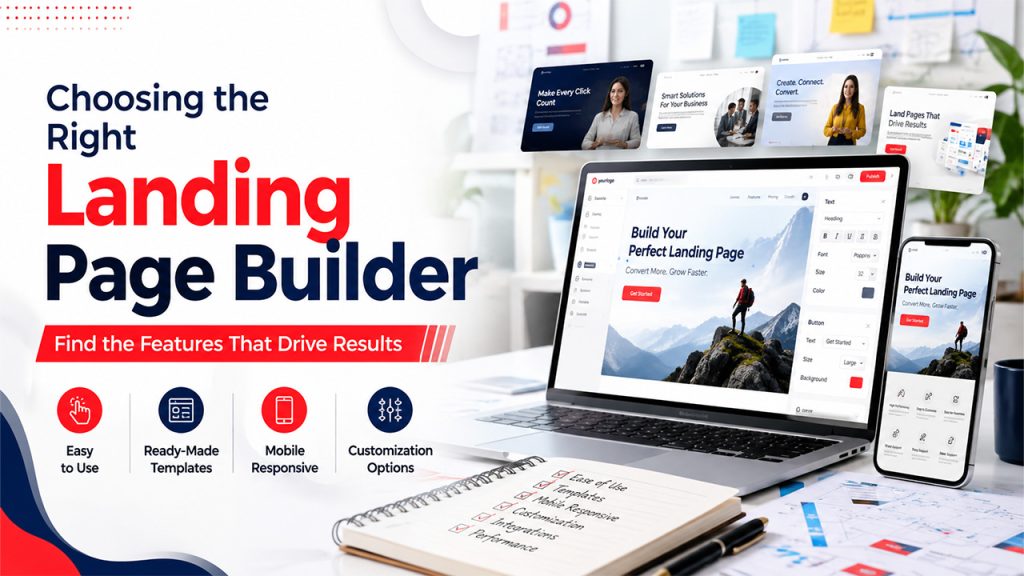
Selecting the right landing page builder is among the most crucial decisions that can significantly impact the success of the marketing campaign. There are numerous tools available, offering enhanced capabilities, but choosing a platform that aligns with the business goal, budget, and technical requirements is important.
Some of the key factors to consider while choosing a landing page builder are as follows:
- Ease of Use
A landing page builder should be user-friendly and intuitive, especially if users do not have coding experience. Businesses should look for a platform that offers a drag-and-drop editor, allowing users to create and customize pages effortlessly.
- Ready-Made Templates
Users should choose a builder that offers a wide range of customizable templates for multiple use cases. Professionally designed templates offer significant time savings, ensuring the landing pages follow proven design principles.
- Mobile Responsiveness
An ideal landing page builder should automatically create responsive designs that can be adapted seamlessly to different screen sizes, without requiring any additional adjustments.
- Customization Options
An ideal landing page builder should offer extensive customization options, allowing you to edit page layouts, typography, color schemes, buttons, forms, and other design elements.
Common Mistakes to Avoid
A successful landing page generally requires a balance of compelling content, effective design, and a clear conversion strategy. By avoiding a few common mistakes, businesses can design a landing page that can attract visitors and encourage them towards a desired action.
Some of the common mistakes to avoid while creating a landing page are as follows:
- Having Multiple Goals or CTAs
Adding multiple goals like multiple offers, links, or CTAs confuses visitors. Businesses should focus on one primary goal, such as signing up for a service, downloading a resource, or making a purchase.
- Ignoring Mobile Optimization
Many users access websites through smartphones. If a landing page does not work well on a mobile device, it can result in conversions lost. Users should ensure that the landing page is fully responsive to multiple devices.
- Creating a Weak Call-to-Action (CTA)
A poorly designed or unclear CTA can prevent visitors from completing the desired action. Generic phrases like “Submit” or “Click Here” often fail to communicate value.
Conclusion
A landing page builder is among the most powerful tools that help businesses create professional, conversion-focused pages without requiring advanced technical skills. The tool offers key benefits to users, from simplifying page creation and improving user experience to enabling A/B testing, analytics, and seamless integrations. The landing page builder allows users to easily achieve their business goals. However, choosing the right builder and following proven best practices are essential for maximizing results. Businesses create an effective landing page by focusing on clear messaging, strong CTAs, responsive design, and continuous optimization.