











 Continue with Google

 Share on media
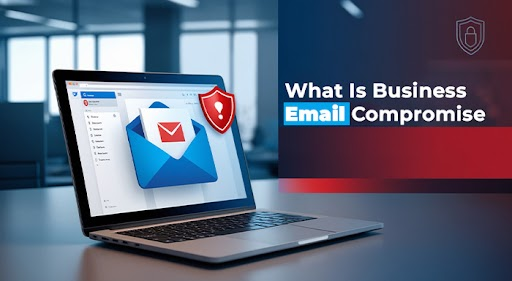
Business email compromise (BEC) is a type of cybercrime where the attacker specifically uses email to trick someone into revealing confidential details or transferring money. The problem has grown and has become widespread over the years, targeting worldwide companies. Studies have suggested that BEC scams have recorded almost $55 billion financial losses in the last decade. Thus, it has emerged as one of the financially disruptive cybercrimes in recent times. These attacks are quite dangerous to detect because they do not contain any nefarious links, attachments, malware, or elements that email security measures can recognize.
In this blog, let us dissect BEC in detail and discover ways to safeguard your business against it.
Business Email Compromise (BEC)-Definition
It can be defined as a form of cyberattack that leverages email and social engineering attacks to defraud a company. In simple terms, here the attackers pose as trusted individuals and ask for billing details, financial data, or any other critical information that can be used in another scam. Essentially, the attacker sends the email to trick the victim into performing some action. Majorly, it involves sending money to the attackers’ account or to fraudulent channels.
BEC attacks are very tricky to detect because they do not look like conventional email attacks with suspicious attachments, links, or malware. Such elements can easily be identified by email security measures and then email can be termed suspicious. However, in the case of BEC attacks, the emails usually contain nothing but text. BEC emails can enter your inbox among your other trusted emails.
Not only can BEC attacks easily bypass robust email security gateways, but they are also uniquely designed to encourage recipients to open them. The message also contains specific motivators that push people toward taking an urgent action. Business email compromise attackers leverage personalization techniques to tailor the email message as per the target organization. For example, an attacker can impersonate someone the victim regularly communicates with via email.
Common Types of Business Email Compromise (BEC) Attacks
Business Email Compromise attacks can happen in several different ways, depending on the attacker’s objective. Understanding these attack types helps organizations identify suspicious behavior before damage occurs.
CEO Fraud
In this type of scam, attackers impersonate a company executive, such as the CEO or CFO and instruct employees to transfer money urgently. Since the request appears to come from senior leadership, employees may act quickly without verification.
Invoice Fraud
Cybercriminals may pretend to be vendors or suppliers and send fake invoices with modified bank account details. Businesses unknowingly send payments directly to the attacker’s account.
Account Compromise
Attackers sometimes gain access to a real employee’s email account through phishing or credential theft. Once inside, they monitor conversations and send fraudulent requests from a legitimate email address.
Attorney Impersonation
Here, attackers pretend to be lawyers or legal representatives and create pressure using confidential or urgent legal matters. The goal is usually to manipulate employees into sharing sensitive information or transferring funds.
Payroll Diversion Scam
In payroll scams, cybercriminals impersonate employees and request payroll account changes. This can redirect salary payments into fraudulent bank accounts.
Organizations that understand these different forms of BEC attacks are more likely to identify suspicious activities early and prevent financial losses.
Why Are BEC Attacks Difficult to Detect?
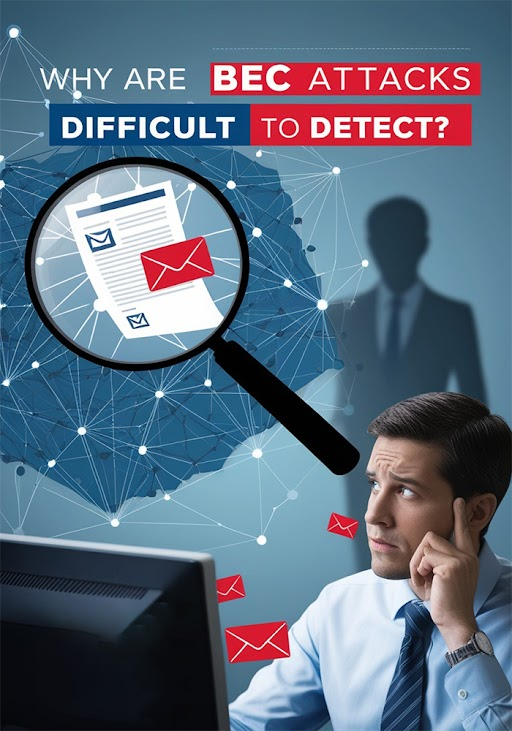
Businesses have the hard time spotting BEC attacks because of the following reasons:
Low-Volume Attack: One of the reasons email security systems can detect conventional cybersecurity attacks is through unusual traffic of emails. On the contrary, BEC attacks come in extremely low volume and generally do not cause any major spike in email traffic. Since BEC emails are sent in low volume, a cyber attacker gets the time to quickly change the IP address. Therefore, BEC campaigns are also quite difficult to block as well.
They Have a Reliable Source or Domain: Phishing attacks can be easily identified because they come from domains that can easily be spotted and blacklisted. Since BEC attacks are low volume, the culprit can use a credible IP address with a good reputation to trick email security systems. Attackers also use a concept called email domain spoofing to make recipients realize that emails have come from a genuine sender.
They Come Through DMARC Inspection: DMARC is a protocol for recognizing emails that have come from a domain without authorization. It can detect whether the sender has impersonated a domain. BEC scams can pass this DMARC check mainly due to two reasons: 1) some organizations do not choose to strictly configure DMARC to block emails strictly and 2) since BEC emails look to come from a legitimate source, they easily pass through these checks.
Is Secure Email Gateways Effective Against Business Email Compromise (BEC) Campaigns?
A secure email gateway is a robust security measure that leverages signature analysis and machine learning technology to recognize and block suspicious emails before they even arrive at the recipient’s inbox. They are effective in filtering out dangerous email and can be a good solution against cyber threats like spear phishing. Originally, SEGs were designed to deal with spam and they used to get a considerable amount of samples to know what suspicious emails look like.
However, in the case of BEC, there is no malware, ransomware, phishing links, or other overly suspicious content that can easily be detected. Therefore, it is more difficult to identify BEC emails. SEGs would require additional machine learning algorithms and threat intelligence features to be more effective against BEC attacks. Users must use advanced SEGs to have a higher chance of preventing BEC attacks.
How to Ensure Protection Against BEC Attacks?
One of the ways users can identify BEC attacks is the sudden and unexpected nature of emails. Attackers might pose themselves as genuine and even authoritative, but they would usually ask you to perform an activity quite urgently. If you know the sender, then it is advisable to cross-check with the person directly to see whether he or she has sent the email or not.
Businesses can also lay out email security policies to train staff about the potency of these attacks. There are also other technical measures businesses can take to ensure protection against BEC attacks-
Sophisticated Detection of Phishing Infrastructure
There are some email providers that assess the web in advance to keep track of fake websites, C&C servers, and other strategies cyber attackers can use in BEC campaigns or phishing attacks. This process basically requires web crawler bots to find these servers and fake websites. Recognizing these attacking sources and infrastructure allows the provider to block the emails immediately even if they look genuine and can pass through email security systems.
Machine Learning Algorithms
Machine learning is a great technology to forecast outcomes based on large historical data. It is an effective strategy to detect all activities that look out of the ordinary such as bot attacks. By analyzing your historical data, machine learning tools can easily help you spot unusual email traffic, odd requests, and other anomalies.
Analysis of Email Threats
There are some BEC campaigns that slide through an existing email thread to improve their genuineness. Robust email security measures can analyze these threads closely and see whether subtle details such as “To” and “From” have been changed unexpectedly.
Analyze Emails
User smartness and training are key to preventing BEC attacks. For example, a user can spot key phrases and anomalies which might indicate suspicious nature of the emails. For example, if you receive an email from John about something related to customer relations, and you know that John is from accounts, then it is an indication of a BEC attack. Users can use NLP tools to monitor certain patterns and detect predetermined keywords within an email.
Best Practices for Employees to Prevent BEC Attacks
Employees play a major role in preventing Business Email Compromise attacks. Even advanced email security systems can fail if users unknowingly trust fraudulent emails. Following best practices can significantly reduce the risk of attacks.
Verify Urgent Requests
Always verify requests involving money transfers, password resets, confidential files, or sensitive data through another communication channel such as a phone call or video meeting.
Avoid Sharing Sensitive Information Through Email
Employees should never send financial credentials, login details, or confidential business documents through unsecured email conversations unless properly verified.
Enable Multi-Factor Authentication (MFA)
Using MFA adds an extra layer of security to business email accounts. Even if attackers steal passwords, they may still fail to access the account.
Be Careful With Email Display Names
BEC attackers often use display names similar to executives or coworkers. Users should carefully inspect the sender’s complete email address before taking action.
Use Separate Business Communication Tools
Many businesses now use dedicated communication systems along with email for verification purposes. Features like an Email Alias can also help organizations manage communication securely while reducing exposure of primary email accounts.
Regular employee training combined with advanced email security tools can dramatically reduce the chances of successful BEC attacks.
Conclusion
One of the reasons BEC scams are on the rise is due to an increase in the number of remote work opportunities happening all around the world. In the last year alone, the Federal Bureau of Investigation has received around 20,000 complaints. The blog explores all the fundamentals of Business Email Compromise (BEC) attacks, why they are dangerous and difficult to detect and how to protect your business from them. For more informative blogs on emails, email technologies, and steps to take when your email is hacked, check out the blog section!
FAQs About Business Email Compromise (BEC)
What is the difference between phishing and Business Email Compromise (BEC)?
Phishing attacks usually involve malicious links, fake login pages, or harmful attachments. Business Email Compromise attacks are more sophisticated and often rely on social engineering without using suspicious links or malware.
Can small businesses become victims of BEC attacks?
Yes, small businesses are frequently targeted because they often have weaker cybersecurity systems and limited employee training compared to larger organizations.
How do attackers gain access to business email accounts?
Attackers commonly use phishing emails, weak passwords, credential theft, malware, or social engineering tactics to gain access to business email accounts.
Does multi-factor authentication help prevent BEC attacks?
Yes, multi-factor authentication (MFA) significantly improves email security by requiring additional verification beyond just a password.
Are cloud storage platforms safe from BEC-related threats?
Cloud platforms can still be targeted if attackers gain access to employee accounts through email compromise. Businesses should always review security settings and understand topics such as Dropbox security practices. Articles discussing whether Dropbox is secure enough for business environments can help organizations improve overall cybersecurity awareness.