





These days, contact information is everywhere—on websites, documents, emails, and online profiles. With so much data available, phone number extractor step in to make life easier. They extract phone numbers fast, organize them, and save significant amounts of time.
Phone number extractors are widely used by businesses, researchers, and teams that work with large volumes of contact data. When used correctly, these tools improve accuracy, reduce repetitive work, and support smoother workflows across departments such as sales, customer support, recruitment, and operations.
This article explains what a phone number extractor is, how it works, where it is commonly used, and how to use it effectively. It also covers best practices and responsible use, so readers can understand both the practical value and the boundaries involved.
What Is a Phone Number Extractor?
A phone number extractor helps you find and gather phone numbers from documents, websites, emails, or databases. Basically, it scans through the text, spots anything that looks like a phone number, and puts them all together in an organized list. Similar to email data extraction, these tools use pattern recognition to identify and organize contact information efficiently.
Now, whether this tool is good or bad depends on how you use it. The tool itself is neutral from an ethical standpoint, but your intentions, consent, and the context determine its legitimacy.
How Phone Number Extractors Work
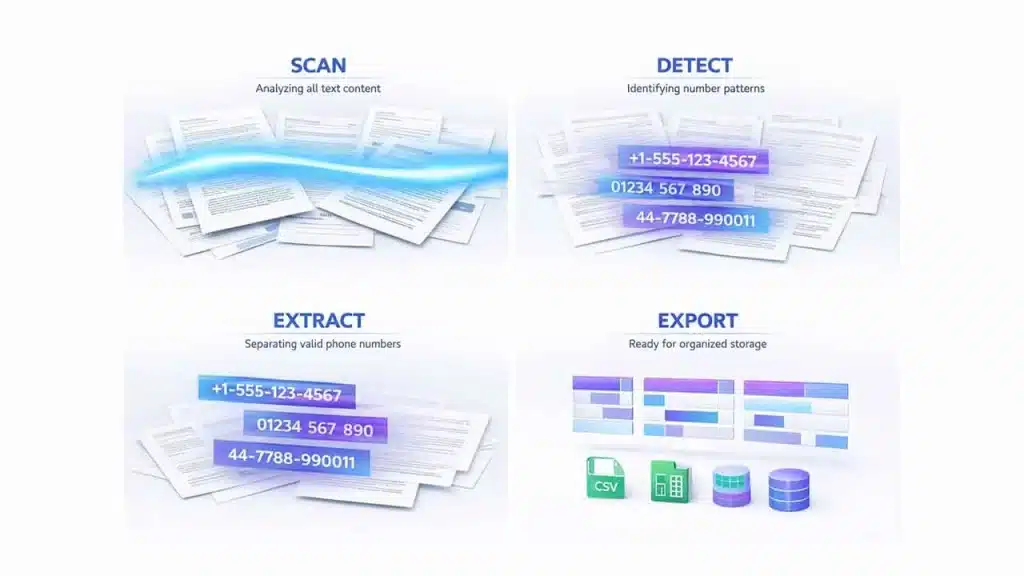
Phone number extractors look for patterns like how many digits are in a number, where separators are used, or if there’s a country code. They do not understand consent or context the way people do.
A typical phone number extraction process follows this flow:
- Scan: The tool scans the selected source, such as a document, webpage, or email file, to analyze all text content.
- Detect: It detects phone numbers by matching patterns like digit length, separators, and country or area codes.
- Extract: Identified phone numbers are pulled from the text and separated from the surrounding content.
- Export: The extracted data is exported into formats like spreadsheets, CSV files, or databases for further use.
This structured approach allows teams to process large volumes of contact data quickly while keeping the information organized and easy to manage.
Benefits of Using a Phone Number Extractor
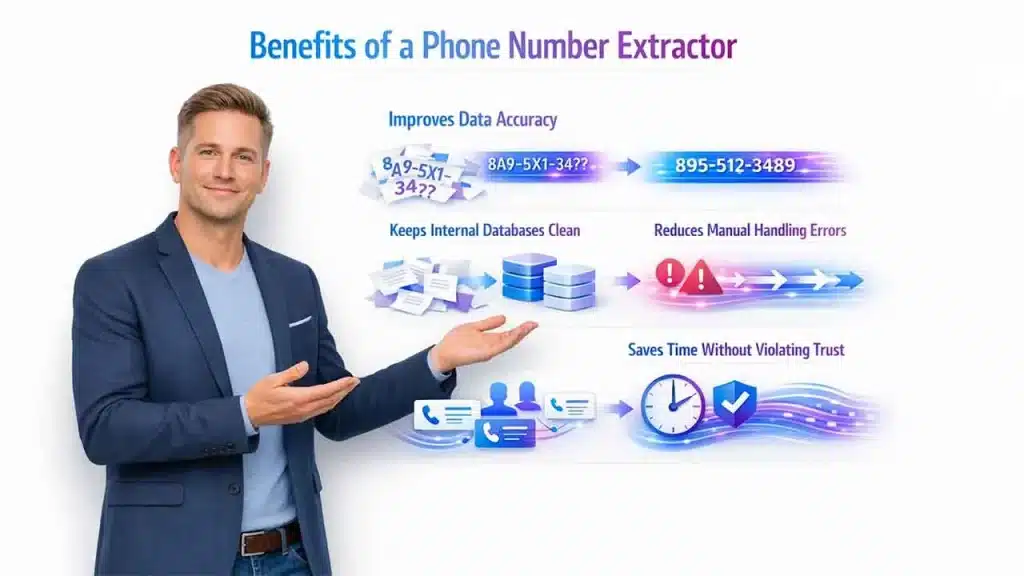
Tools that extract phone numbers provide real value when it is used responsibly, let’s look at some of the benefits:
Improves data accuracy: Automated extraction makes your data more accurate. You skip the usual mistakes and weird mismatches you get when people do manual data entry.
Keeps internal databases clean: Your internal databases stay tidy, too. With structured extraction, you keep your contact lists organized and up to date, not scattered across random files or stuck with old information.
Reduces manual handling error: You also cut down on errors. When there’s less manual work, there’s less chance someone accidentally exposes data, enters the same thing twice, or just gets something wrong.
Supports customer service & relationship management: When you have reliable, permission-based contact data, your team can reach out to customers at the right moment, with the right message.
Saves time without violating trust: It also saves time and keeps things above board. Good tools speed up your workflow but still respect consent and stick to how the data’s supposed to be used.
Common Use Cases of a Phone Number Extractor
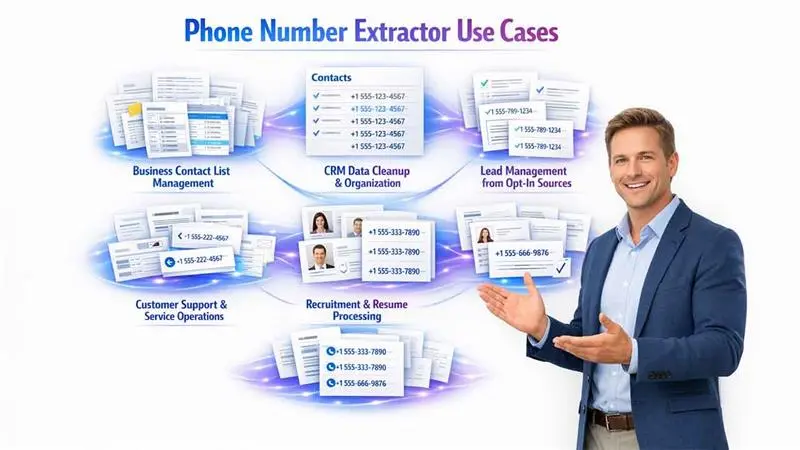
Phone number extractors are practical tools designed to solve everyday data management problems. They are commonly used in situations where contact information already exists but needs to be collected, organized, or cleaned for operational use.
Business Contact List Management
Many businesses store phone numbers across spreadsheets, documents, emails, and CRM systems. A phone number extractor helps consolidate these scattered contacts into a single, structured list. This is especially useful when migrating data between systems or preparing updated contact databases for internal use.
CRM Data Cleanup and Organization
Over time, CRM platforms often accumulate duplicate or inconsistently formatted phone numbers. Extractors help identify valid phone number entries, standardize formats, and remove errors. This improves data quality and ensures sales and support teams work with accurate information.
Lead Management from Opt-In Sources
Marketing and sales teams frequently collect phone numbers through sign-up forms, inquiries, and customer registrations. A phone number extractor can quickly pull these details from form submissions or reports, allowing teams to follow up efficiently without manual sorting.
Customer Support and Service Operations
Support teams often receive phone numbers through emails, tickets, and chat transcripts. Extracting these numbers into a centralized system helps improve response time, customer identification, and case tracking. It also reduces the risk of missed or duplicated follow-ups.
Recruitment and Resume Processing
Recruitment teams work with large volumes of resumes and application documents. Phone number extractors can scan resumes and candidate files to collect contact details, making it easier to build candidate databases and speed up the screening process.
Research and Data Analysis
Researchers, analysts, and auditors often work with reports or datasets containing embedded contact information. Phone number extractors simplify the process of identifying relevant phone data for verification, analysis, or internal documentation.
Responsible and Ethical Use of Phone Number Extractors
Using a phone number extractor responsibly depends on permission, purpose, and transparency. These tools are meant to organize existing contact data, not collect information without consent. When used correctly, they improve efficiency while respecting privacy and trust.
Responsible extraction involves working only with authorized data such as internal documents, opt-in forms, or client-provided files. Misuse occurs when consent or context is ignored, increasing privacy and legal risks.
| Ethical Data Extraction | Unethical Data Extraction |
| Extracting phone numbers from your own databases | Scraping personal phone numbers without consent |
| Organizing contact details collected through opt-in forms | Using extracted numbers for spam or unsolicited outreach |
| Cleaning and standardizing customer data for internal CRM use | Selling or sharing contact data without authorization |
| Extracting phone numbers from documents shared with permission | Ignoring privacy laws and platform terms |
Responsible use protects data integrity and user expectations, while irresponsible practices damage credibility and increase compliance risks. The goal is not just faster data collection, but trusted, sustainable data management.
Common Mistakes to Avoid
Even with good intentions, poor data practices can lead to privacy violations, legal risks, and loss of trust. These are the most common mistakes to watch out for:
Extracting more information than necessary: Sometimes people collect more data than necessary. Ethical extraction follows the principle of minimalism. Collect only what serves a specific purpose.
Retaining data indefinitely: Holding onto data is risky. Stashing information “just in case” isn’t only dangerous, but it also violates ethical storage limitations.
Assuming public data equals free data: Visibility does not equal consent. Public availability does not remove privacy expectations.
Using extracted numbers for aggressive marketing: Cold calls and random messages don’t just annoy people; they erode trust and damage your brand’s reputation and credibility.
Ignoring user expectations: You can’t just ignore what people expect, either. Ethics asks you to put yourself in their shoes. If someone knew how you used their data, would they feel okay about it?
Final Thoughts
A phone number extractor is more than a quick way to boost productivity. It’s a practical tool that works best when used thoughtfully. These days, trust is hard to earn, and privacy really counts. If you use these tools the right way, you build sustainable business instead of just chasing fast results.
Extracting phone numbers should be about staying organized, accurate, and helpful; not crossing boundaries. When you stick to consent, stay transparent, and keep respect at the center, extracting numbers isn’t a problem. It’s just part of working smarter. Ethics aren’t a roadblock—they’re what keeps your business safe down the line.
FAQs
Is using a phone number extractor ethical?
Yes, it is ethical when the data is collected with clear consent, transparency, and a legitimate purpose. Ethical use also requires respecting privacy expectations and data protection laws.
Can I extract phone numbers from public websites?
You may extract business contact numbers that are publicly shared for professional use. Personal phone numbers still require explicit consent, even if they appear online.
What is an email and phone number extractor?
This tool is designed to organize contact information from authorized sources for legitimate purposes. They are used for data management, not spam or cold outreach.
Are phone number extractors legal?
Phone number extractors are legal when used in compliance with data protection regulations like GDPR and similar laws.
How can businesses use phone number extractors responsibly?
Businesses should limit extraction to opt-in data and use it only for defined purposes. Securing stored information and respecting user expectations are equally important.